How to Get a Custom Golf Club Fitting: The Ultimate Step-by-Step Guide (2026)
Last updated: July 5, 2026
Key Takeaways
Custom golf club fitting matches equipment to your swing rather than forcing you to adapt to standard specs. Here’s the short version:
- Most golfers play ill-fitted clubs. A Golf Datatech study cited across the industry puts the figure at roughly 90% of U.S. golfers, contributing to inconsistency, lost distance, and compensating swing mechanics.
- Fitted golfers report real gains. Survey data links fitting to better accuracy and consistency, and the same Golf Datatech research found 94% of fitted golfers were at least satisfied with the experience. Be wary of anyone promising exact stroke or yardage numbers — results vary by player.
- Higher handicappers often benefit most, since they lack the neuromuscular skill low-handicap players use to compensate for poorly fitted equipment.
- Six specifications get analyzed: club head design, shaft flex and material, lie angle, grip size, loft/offset, and swing weight — each affects the others.
- Budget 60–90 minutes per session, with typical costs of roughly $50–100 for a basic fitting up to $200–400 for a full-bag analysis.
- Launch monitors and high-speed cameras replace guesswork with measured ball speed, spin rate, and launch angle data.
The bottom line: fitting removes equipment variables so you can focus on swing mechanics — one of the smartest investments at any skill level.
Spending $1,000 or more on new irons without a fitting is like buying expensive running shoes without knowing your size. As Practical Golf’s iron fitting guide puts it, the shaft functions as your swing’s transmission, and lie angle ranks among the most critical specifications to optimize. One classic warning sign: many golfers in their 40s through 60s see only about 5 yards of difference between their 4- and 5-irons — a signal the set no longer matches the swing. This guide walks through the complete fitting process: how to find quality fitters, what the technology measures, and how to maximize your investment.
Why Custom Golf Club Fitting Matters for Your Game
Common Problems with Standard Clubs
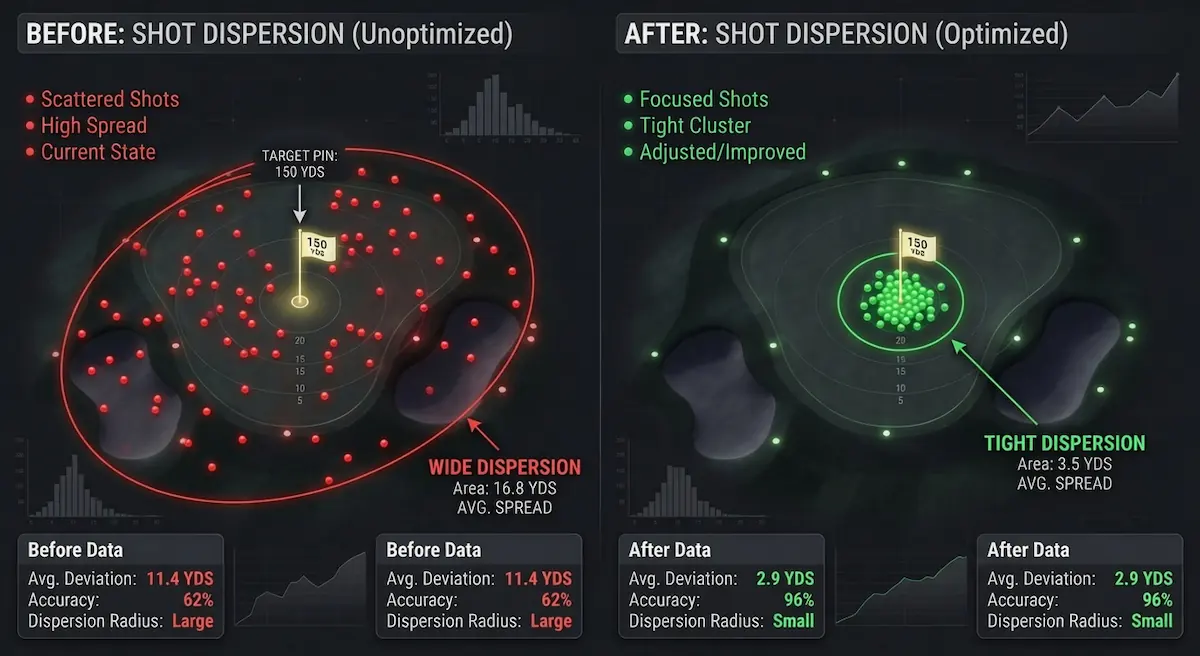
A 2023 Golf Datatech study, cited by Greystone Golf & Country Club, found that about 90% of U.S. golfers may be playing clubs that don’t fit them. Off-the-rack sets are built around average measurements and standard body proportions — ideal for perhaps one golfer in ten. Everyone else compromises.
Ill-fitting clubs force you to manipulate your swing instead of letting the club work for you, and True Spec Golf notes that misfit equipment affects mechanics and can even contribute to injury. Some issues only surface when fatigue sets in on the back nine. Golfers with too-long clubs stand too upright to avoid digging the toe, or bend excessively from the waist — creating tension in the shoulders and lower back that restricts rotation. Custom fitting works the opposite way: it identifies your swing characteristics and builds the set around them.
Performance Improvements You Can Expect
Reported gains from published surveys and industry sources — treat the specific numbers as directional, not guaranteed:
- Accuracy: the Golf Datatech research cited above reports that a large majority of custom-fit golfers hit the ball more accurately and consistently based on launch monitor tracking.
- Distance: aggregator sources citing Golf Digest testing report meaningful average distance gains and tighter dispersion for players who switched to fitted clubs; GOLFTEC’s own fitting data claims an average of roughly 20 yards gained with the driver. These are seller-side numbers — your mileage will vary.
- Scoring: the same survey research found fitted golfers were more likely to report multi-stroke scoring improvements. No fitting can promise a specific stroke gain, and any fitter who does should raise a flag.
What you can reasonably expect: more consistent ball striking, a more effective launch window, and better dispersion — because the club stops fighting your swing.
Who Should Get Custom Fitted
Many higher-handicap golfers assume fitting only benefits skilled players. The opposite is closer to the truth. As club designer Tom Wishon has argued, low-handicap players can perform well across a wide range of specs thanks to superior athletic and neuromuscular skill — middle and high handicappers can’t make those adjustments, so poor fit forces more swing mistakes. If you’re in the 8–18 handicap range, our dedicated golf club fitting guide for intermediate golfers covers exactly what to expect and how to prepare.
Beginners face a particular trap: clubs that are too heavy, too long, or too stiff encourage compensations that harden into ingrained habits. Clubs matched to your build, strength, and club head speed are the foundation of systematic improvement.
Essential Components Analyzed During Custom Fitting
Fitters analyze six interconnected specifications. Each influences the others — changing one element affects the entire setup.
Club Head Design and Face Technology
Modern club heads vary widely in forgiveness philosophy. TaylorMade’s Twist Face technology uses engineered face curvature to deliver corrective angles on off-center strikes. Cavity-back irons push weight to the sole and perimeter for forgiveness on mishits; blades offer superior feedback and shot-shaping but demand precise contact. Forged irons emphasize consistency through controlled manufacturing, while cast construction allows more complex designs at lower cost. If forgiveness is the priority, see our research-based roundup of the best game improvement irons for 2026.
Shaft Material and Flex Profile
Steel iron shafts typically weigh about 95–130 grams with torque around 1.5°–2.5°, offering consistency and direct feedback. Graphite runs roughly 65–90 grams with 2.0°–5.0° torque, enabling faster swing speeds with less effort — across a full iron set, graphite can shave roughly 245 grams of total shaft weight.
Flex is commonly matched to driver swing speed: senior flex around 75–85 mph, regular roughly 80–95 mph, stiff about 95–105 mph. Too stiff robs launch and can leave the face open at impact; too soft adds unwanted spin and launch. Tempo matters too — a smooth 95 mph swinger may perform better in regular flex, while an aggressive transition at 90 mph might load a stiff shaft correctly.
Lie Angle and Length Specifications
Lie angle is the angle between shaft and ground with the sole flat. Too upright and the heel digs, aiming the face left (for right-handers); too flat and the toe digs, aiming right. The effect strengthens as loft increases, making lie angle most critical in scoring clubs.
Standard men’s driver length is around 45 inches with graphite. Irons progress from roughly 37.5 inches for a 7-iron down to about 35.75 inches in the wedges. Wrist-to-floor measurement gives a more accurate starting point than height alone because it accounts for arm length.
Grip Specifications
Rubber grips offer durability and familiar feel; cord grips add traction in humid or wet conditions; softer synthetic grips absorb vibration, which helps golfers with joint issues. Sizing starts from a hand measurement (wrist crease to middle fingertip): under 5 inches suggests junior, 5–6.5 undersize, 6.6–7.5 standard, 7.6–9 midsize, and over 9 inches jumbo — confirmed by feel and glove size during the fitting.
Loft and Offset Adjustments
Offset positions the leading edge behind the hosel, giving a split-second more time to square the face — a genuine slice-fighting feature. It also moves the center of gravity back from the shaft, promoting higher trajectory. The lower the loft, the bigger the offset benefit, which is why offset matters more in woods and long irons than in wedges.
Swing Weight and Balance
Swing weight measures how heavy a club feels during the swing, using a 14-inch fulcrum scale from A0 (lightest) to G9 (heaviest). Men’s drivers commonly sit around D0–D3, women’s around C6–C9. Faster swingers often prefer heavier swing weights (D2–D4) for stability; slower swingers benefit from lighter builds (C8–D0) to maintain speed without fatigue.
Step-by-Step Guide to Getting Custom Fitted
Step 1: Research Fitting Options Near You
You have four main routes. Club professionals at your home course often fit or can recommend trusted local fitters. Big-box retailers offer in-store fittings, usually into nets or simulators. Driving-range locations let you observe actual ball flight. Specialist brand-agnostic studios fit across multiple manufacturers, and brand-specific fitting centers offer direct manufacturer access plus traveling demo days. Golf Digest’s clubfitter directory recommends seeking brand-agnostic fitters with modern technology who listen more than they sell. To locate studios in your area fast, use our golf club fitting near me finder.
Step 2: Schedule Your Fitting Appointment
Plan for roughly 30–60 minutes per club category — a single-category fitting takes about an hour, and a full-bag session can span 2–3 hours. Arrive 10 minutes early to stretch and warm up, and bring your current clubs, golf shoes, and a glove. Your existing set establishes the baseline your new configuration has to beat.
Step 3: Complete the Initial Assessment
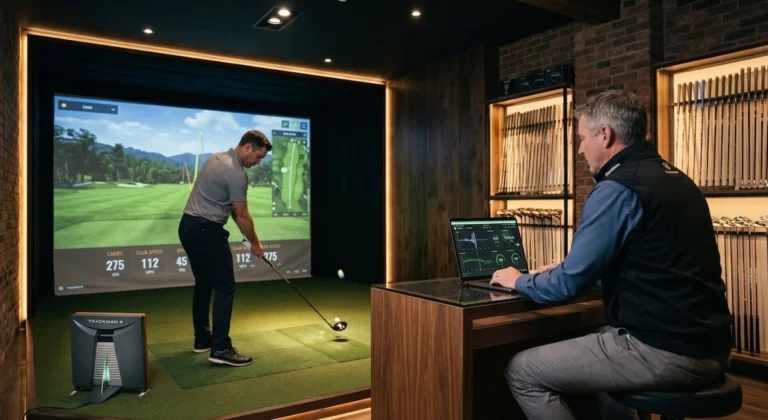
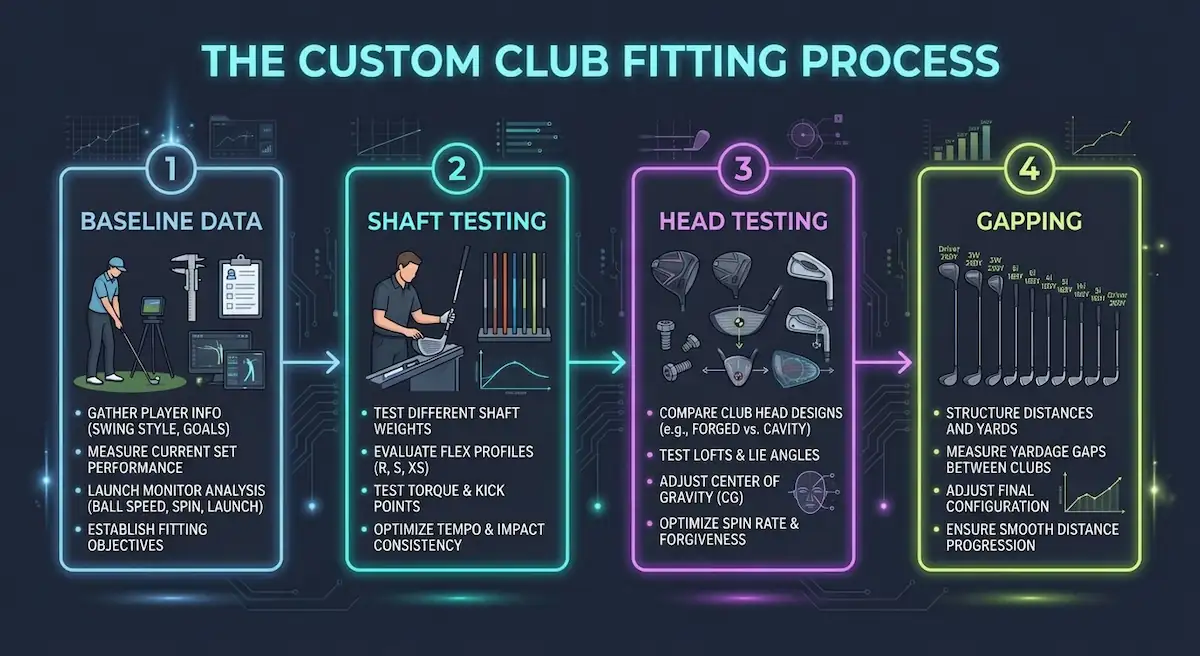
Your fitter starts with a sit-down conversation covering your game, goals, and budget, plus a player profile of your history and objectives. Static measurements follow — hand size, wrist-to-floor distance. Then you hit shots with your current clubs while a launch monitor captures baseline swing speed, ball speed, launch angle, and spin rate.
Step 4: Test Different Club Configurations
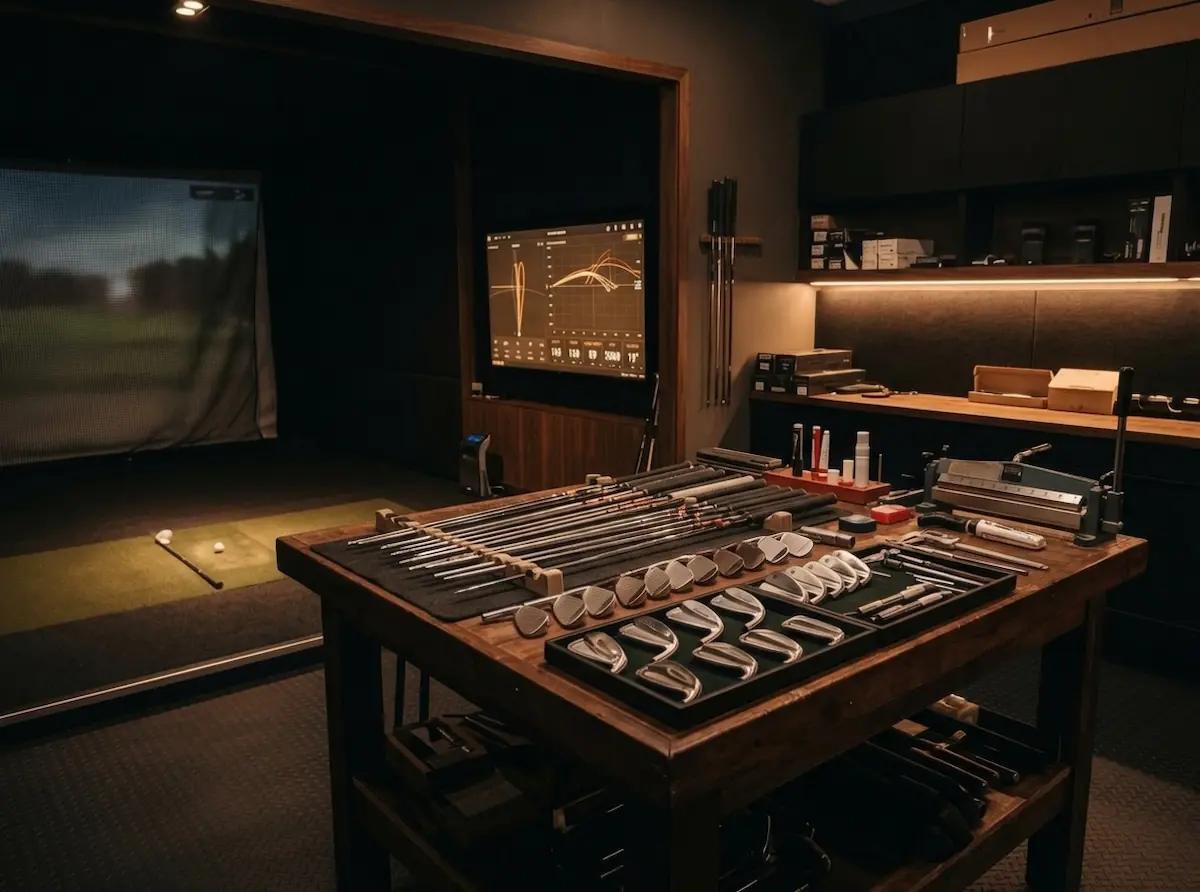
Fitters typically address the shaft first — length, weight, and profile. Once the right shaft emerges, attention shifts to clubheads: face shape, loft, and looks at address all factor in, but on-screen data drives final decisions. Grip selection (size, material, texture) completes the build.
Step 5: Review Data and Make Final Selections
Your fitter presents side-by-side comparisons between your current clubs and the recommended build, with a spec sheet showing exact tolerances for every component. The launch monitor data should demonstrate the gains — yardage, launch window, dispersion — in numbers, not adjectives.
Step 6: Place Your Order (or Don’t)
Reputable fitting locations carry no purchase obligation. You can take your specs home or order on the spot; if you order, builders assemble the clubs to your fitted tolerances. Don’t forget the ball, either — the right ball interacts with your fitted clubs, and our golf ball comparison and fitting guide covers how to match one to your game.
Technology and Tools Used in Modern Club Fitting
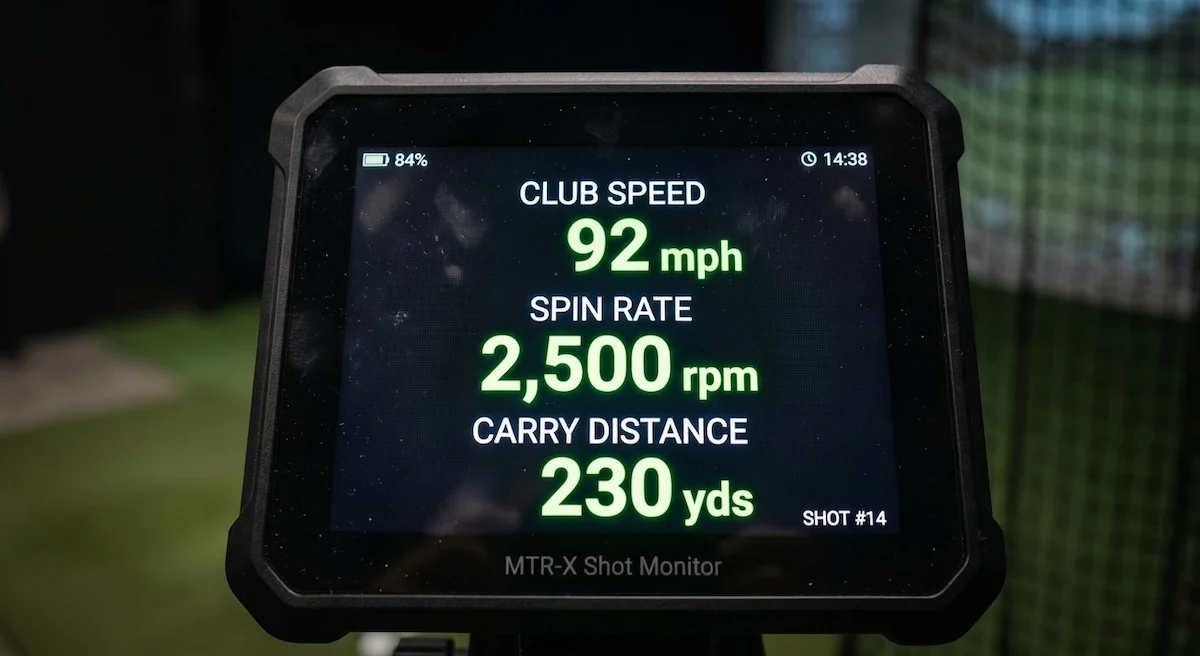
Modern fitting relies on measurement systems that capture what the naked eye can’t, turning subjective feel into objective numbers.
Launch Monitors and Ball Flight Analysis
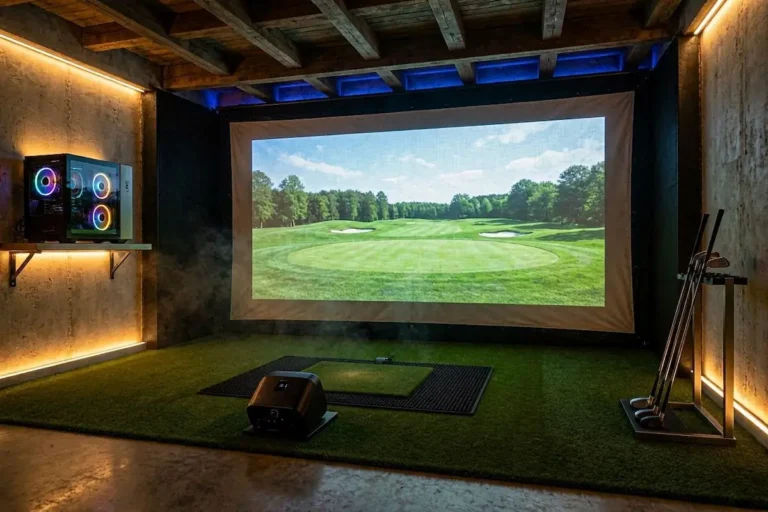
Two core technologies dominate. Camera-based (photometric) systems like the Foresight GCQuad photograph the ball hundreds of times within the first ~30 cm of flight, using multiple ultra-high-speed cameras to directly measure ball speed, launch angles, spin rate, and spin axis. Radar-based systems like TrackMan work the opposite way — tracking the ball downrange and calculating the launch conditions that produced the trajectory. Radar excels outdoors where it can show real flight in wind; indoors it must estimate some spin data. Hybrid units like FlightScope’s Mevo Gen 2 combine radar and camera via Fusion Tracking. This photometric-vs-radar distinction matters beyond the fitting bay — it’s the same divide we analyze in our Uneekor Eye Mini vs. SkyTrak ST MAX vs. Mevo Gen 2 comparison for home simulator buyers.
High-Speed Camera Systems
Dedicated swing cameras run at roughly 120–300 frames per second for frame-by-frame replay analysis. Foresight’s USB Swing Camera delivers 120 fps at 1280×720 using a global shutter (all pixels expose simultaneously, freezing fast motion), while Uneekor’s Swing Optix cameras capture 160 fps at 1080p for crisp stills of positions through impact.
Pressure Plates and Swing Analyzers
Balance plates measure foot pressure distribution, center-of-pressure movement, stance width, and vertical force, with heat maps revealing setup imbalances that create inefficient strikes. Wearable sensors such as Blast Motion’s golf sensor track club speed, tempo, face rotation, and attack angle, syncing to a phone app — and capture metrics even on practice swings without a ball.
Fitting Software and Systems
PING’s Color Code Chart generates length and lie recommendations from height, wrist-to-floor, and build, and its fitting system uses interchangeable clubheads so fitters can test head/loft/shaft combinations against ball speed and stopping power. TaylorMade’s myFittingExperience app lets players book appointments and review the shot and club data captured during their fitting. Club Champion says its AI Fitter Co-Pilot suggests clubhead and shaft combinations to reduce fatigue during long full-bag sessions — a manufacturer claim worth noting as marketing rather than independent data.
Maximizing Your Investment in Custom Clubs
Cost Breakdown and Pricing Expectations
Typical U.S. pricing, per sources like Stix Golf and True Spec Golf — verify current rates with your local fitter:
- Basic fitting: roughly $50–100, covering current-club assessment and basic swing analysis
- Driver- or iron-specific session: roughly $50–150 per category; putter fittings similar
- Full-bag fitting: roughly $200–400, driver through putter with comprehensive launch monitor data
- Premium packages: $300–600+, sometimes including follow-up adjustments
Pricing tracks facility quality, launch monitor tier, and fitter expertise — and many specialty shops waive the fitting fee with a club purchase. Fitting is also only part of the equipment math; if a simulator is in your plans, our 3-year total cost of ownership breakdown shows where the real money goes.
Maintaining Your Custom Clubs
Clean clubs after every round with mild soap and water — but don’t soak hollow-body irons, since water can seep behind backplates. Regrip at least once a year. Store clubs in a climate-controlled environment; extreme heat and humidity weaken adhesive bonds, so avoid leaving them in a car trunk for extended periods.
Signs You Need Adjustments or a Re-Fit
Your game evolves; clubs don’t. MyGolfSpy’s checklist highlights the classic signals: divots that are too deep, too shallow, or pointing sideways (lie angle); a longest iron that never leaves the bag because it won’t launch; wedge gapping problems created by strengthened modern lofts (a 43° pitching wedge jumping to a 52° gap wedge); and players who’ve outgrown game-improvement heads but can’t shape shots — an equipment limitation, not a swing flaw.
The good news: adjustments are cheap relative to new clubs. Lie angle tweaks run roughly $5–10 per club and take minutes; lengthening costs around $8–9 per club plus grips, shortening $3–5. A round of grip and maintenance work typically totals a few hundred dollars versus thousands for a replacement set — approximate figures, so confirm with your shop.
Conclusion
You now have the complete roadmap. Fitted clubs remove the guesswork so you can work on swing mechanics instead of compensating for equipment. And fitting isn’t reserved for low handicappers — mid-to-high handicap golfers arguably gain the most from clubs that complement their swing characteristics.
Find a quality fitter, bring your current clubs for a baseline, and trust the launch monitor data over the sales pitch. It’s an investment that pays off every round.
How this guide was made: XS Golf did not conduct physical club fittings for this article. This guide synthesizes published information from fitters, manufacturers, and independent golf media — including Practical Golf, MyGolfSpy, Golf Digest, True Spec Golf, and manufacturer fitting documentation — with each statistic attributed to its source above. Where figures come from seller-side or survey sources, we’ve said so. Pricing is approximate and changes; verify with your local fitter.