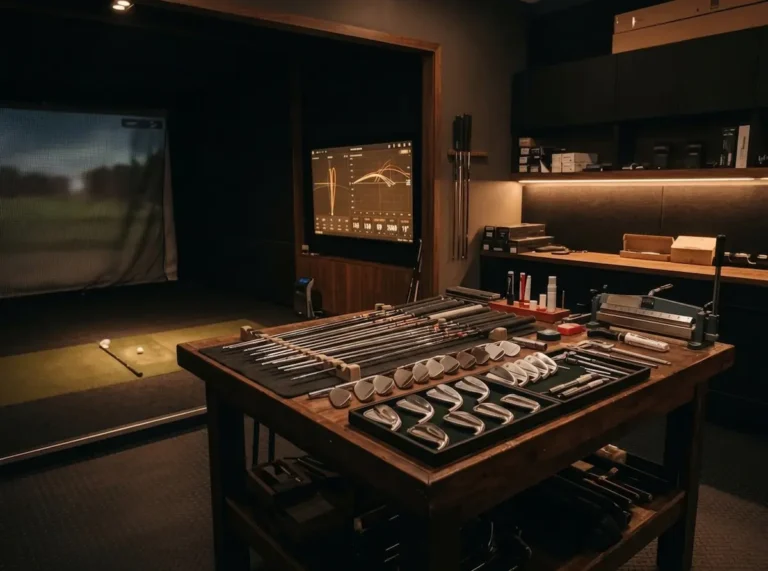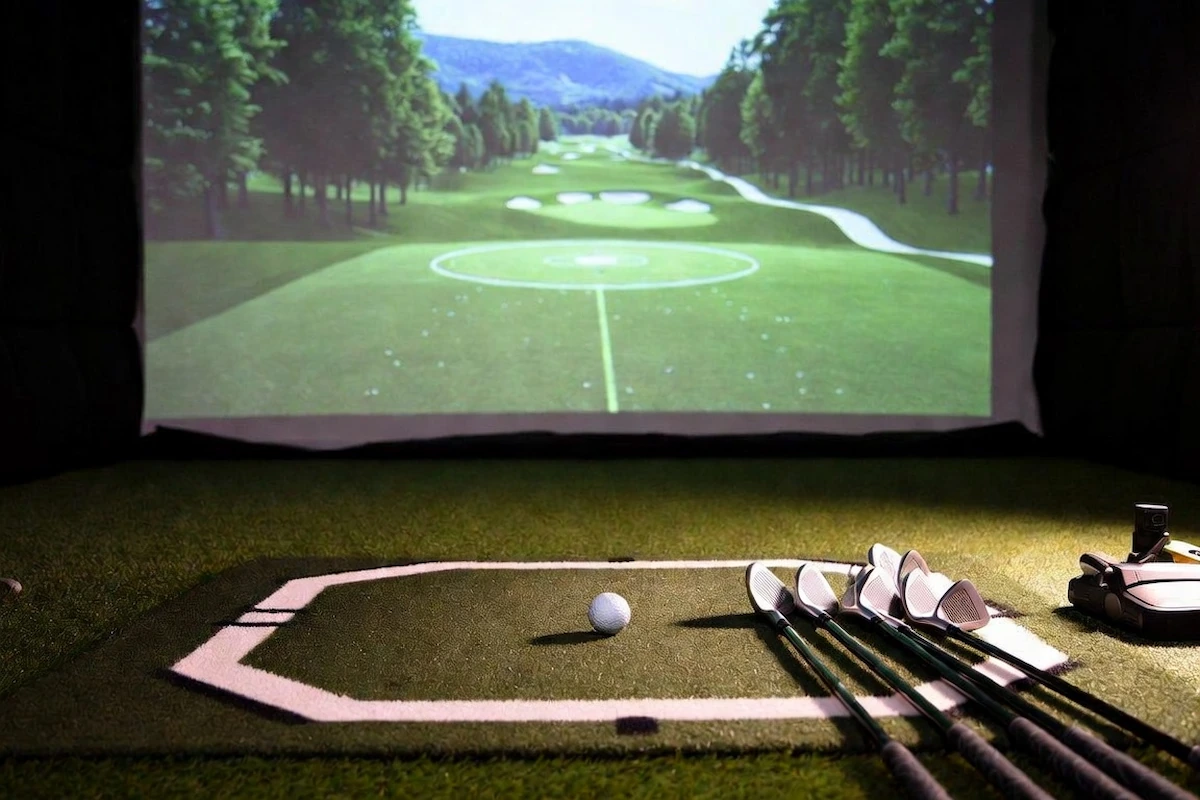
Best Game Improvement Irons 2026 for Golf Simulators: A Research-Based Guide
Last updated: September 19, 2026
How we built this guide (read this first)
XS Golf does not physically test golf clubs. We don’t own a launch-monitor lab, and we won’t pretend to. This guide is a research and synthesis of the published results of independent club testers — primarily MyGolfSpy’s 2026 Most Wanted Game-Improvement Iron test — cross-referenced against manufacturer specifications and other reviewers (Golf Monthly, Today’s Golfer, Golfer Geeks, National Club Golfer). Where we cite a number, it comes from one of those sources, and we name the source.
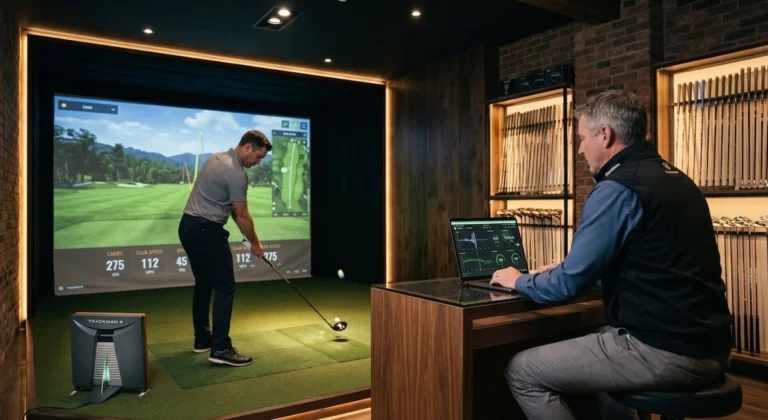
What we do add is the part the big iron round-ups skip: how these clubs behave in a golf simulator setup, and how to read your own launch-monitor data to pick between them. That’s the lens for everything below.
A note on data: The performance findings here are MyGolfSpy’s and other outlets’ — not ours. Treat manufacturer prices as approximate; they change, so confirm current retail before you buy.
Why game improvement irons make sense for simulator users in 2026
Game improvement (GI) irons are built for mid- and high-handicap golfers who don’t consistently find the centre of the face and lose distance and accuracy as a result. They use larger heads, perimeter weighting, wider soles, stronger lofts and launch-friendly designs to make the ball go higher, straighter and a little farther on off-centre strikes.
For a simulator owner, that forgiveness has a second benefit beyond your scorecard: cleaner data. A more consistent strike produces more consistent ball-speed and launch numbers, which means your dispersion charts, carry gaps and shot-tracking in GSPro, E6, TGC and similar software reflect your swing rather than the noise of random mishits — especially early in a session on a mat, when your strike is least repeatable.
That’s the honest case. It is not “these clubs will lower your handicap.” It’s “these clubs tend to produce more repeatable numbers, which makes your indoor practice more legible.”
What the 2026 independent testing actually found
The most rigorous public data set for this category is MyGolfSpy’s 2026 Most Wanted Game-Improvement Iron test. Per MyGolfSpy, the test ran across 13 game-improvement irons over roughly 260 hours, with testers accumulating 12,480 shots of data captured on a Foresight GC Quad, all hit with Titleist Pro V1 golf balls. MyGolfSpy scores three categories — distance, accuracy and forgiveness — and treats accuracy as the most important.
| Rank | Model | What the independent data shows | Simulator angle | Approx. price |
|---|---|---|---|---|
| 1 | Takomo 101 MKII | MyGolfSpy 2026 GI winner; led the field in accuracy; not the longest | Field-leading accuracy = trustworthy sim data | $579 |
| 2 | Callaway Apex Ti Fusion 250 | 2nd overall; 3rd in distance & accuracy | Balanced numbers; realistic carry & gapping | From ~$2,150 (set); ~$358/club |
| 3 | ONOFF A.K.A. | 3rd overall; 2nd in accuracy; strong distance | Strong accuracy, but hard to source in the US | Limited US; import sets ~$1,000–$1,500 |
| — | Haywood SV.2 | 1st in dispersion (Shot Area); near bottom for carry | Best fix for wide left-right scatter | ~$699 |
1. Takomo Iron 101 MKII — the value-and-accuracy story
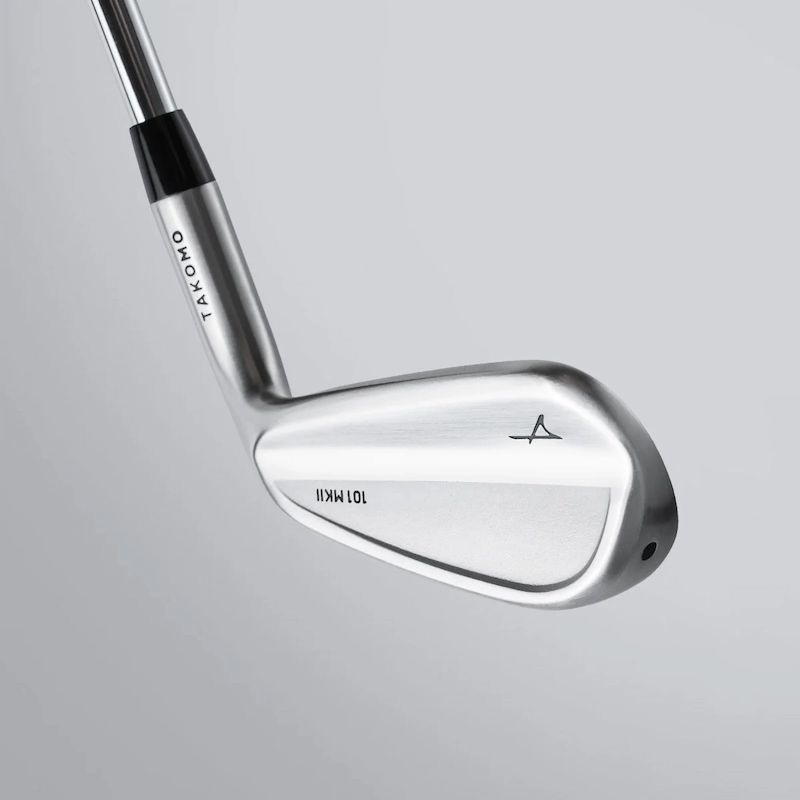
This is the genuinely notable result of 2026. The Takomo 101 MKII, a direct-to-consumer iron, won MyGolfSpy’s 2026 Most Wanted Game-Improvement test outright, finished No. 1 overall, led the entire field in accuracy, and costs $579 — a fraction of most big-brand sets. (Golfer Geeks pegs that at roughly $83 per club; National Club Golfer lists it at “just over £500” in the UK.)
The honest caveat MyGolfSpy itself flags: it was not the longest iron in the test — about a yard and a half shorter than the test average for carry. So if raw distance is your only goal, this isn’t the one. If you want the iron that performed best overall and tightest on accuracy, it earned that.
Simulator angle: A field-leading accuracy result is exactly what you want feeding a launch monitor — tighter dispersion means your indoor numbers are trustworthy rather than scattered. The players-iron-style looks are a bonus if a chunky “beginner” profile dents your confidence over the ball.
2. Callaway Apex Ti Fusion 250 — well-rounded, premium-priced
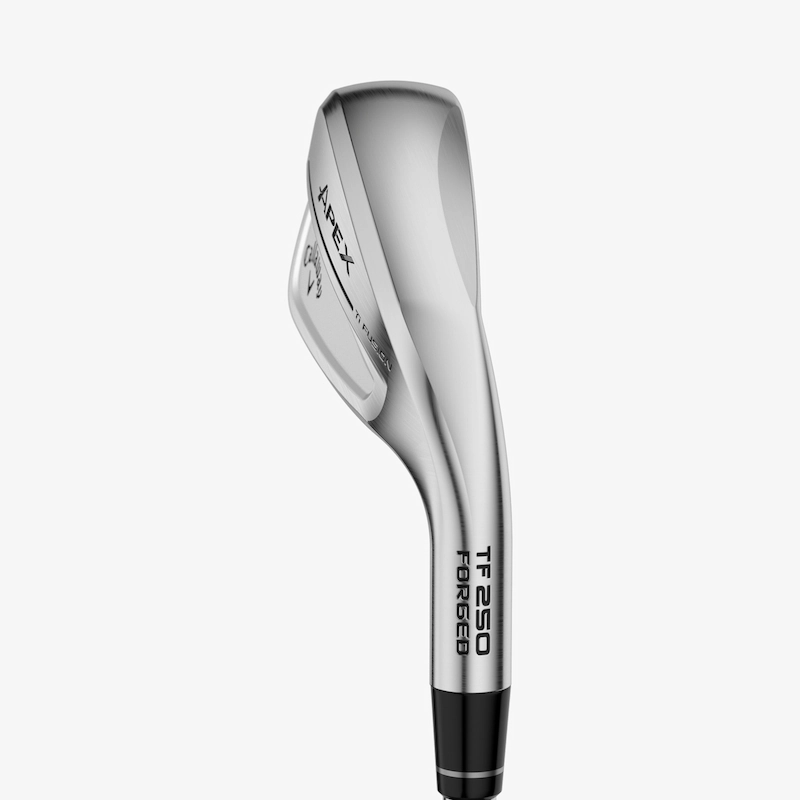
The Apex Ti Fusion 250 finished second overall in MyGolfSpy’s 2026 GI test, ranking third in both distance and accuracy — a balanced, high-performing result. MyGolfSpy notes it’s among the more expensive irons in the category, and one tester observed it “looks closed at address.” Some reviewers consider it a crossover between game-improvement and players’-distance.
Simulator angle: A balanced distance/accuracy profile gives you realistic carry numbers and tight-enough dispersion to gap your set confidently indoors. Budget for big-brand pricing — confirm current retail.
3. ONOFF Iron A.K.A. — accuracy surprise, hard to buy in the US
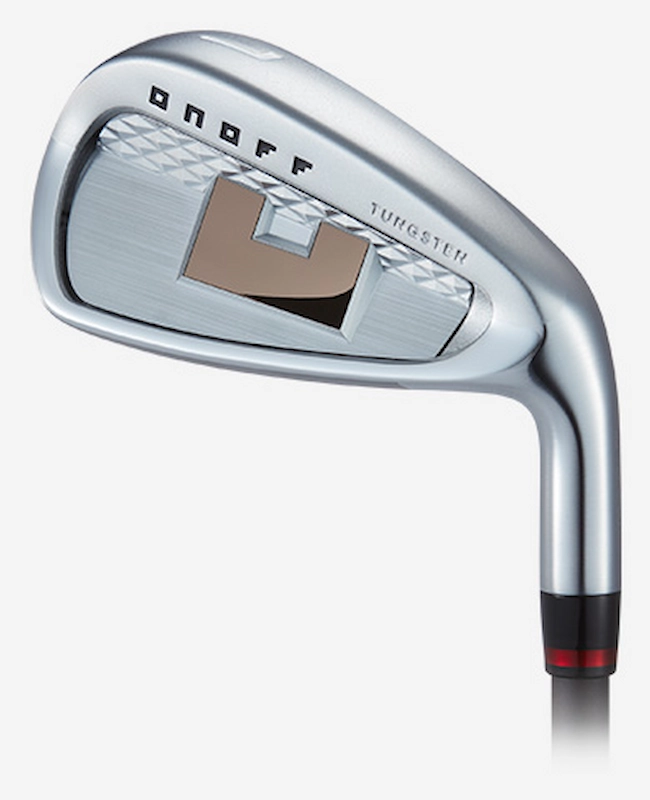
ONOFF’s A.K.A. took third overall and placed second in accuracy — MyGolfSpy’s most heavily weighted category — while also delivering strong distance. The catch is availability: ONOFF has a limited US footprint, so finding a set to demo or buy can be difficult.
Simulator angle: Strong accuracy is the headline, but availability makes this more “worth knowing about” than “easy to put in the bag” for most US-based sim owners.
Also worth knowing: Haywood SV.2 — the forgiveness specialist
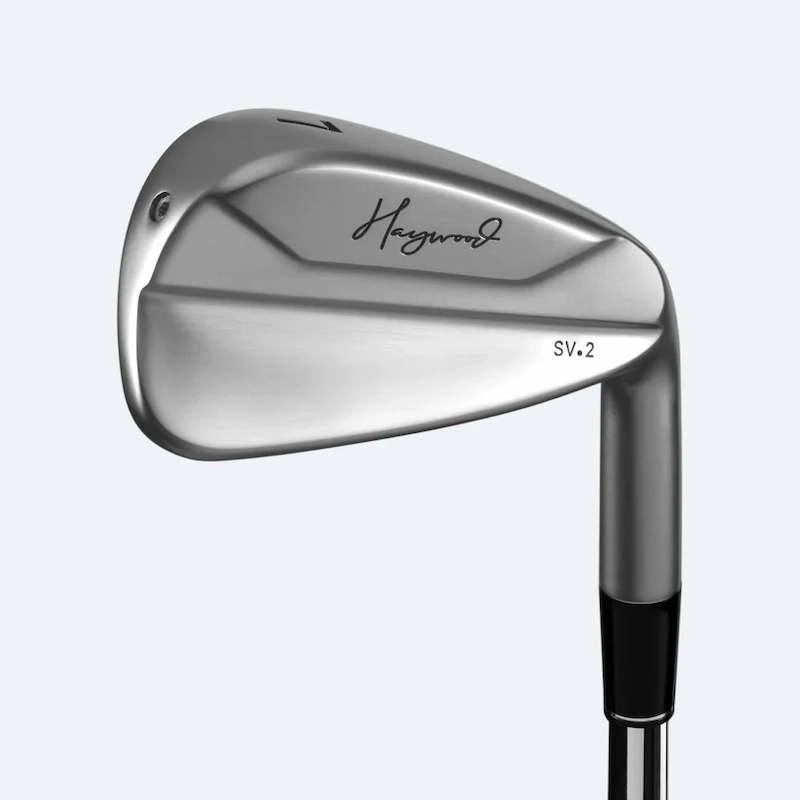
Not on the overall podium, but the SV.2 (about $699) is the dispersion standout of the 2026 GI field. In MyGolfSpy’s deeper data dive it finished first in Shot Area (the size of the dispersion footprint — smaller is better) among the brands measured and second in playable-shot percentage. The trade-off: it finished near the bottom of the field for carry distance. MyGolfSpy’s tester-level data suggests it fits steeper, in-to-out swingers best.
Simulator angle: If your sim data shows wide left-right scatter, an iron that wins on dispersion is the most direct fix — just don’t expect it to add yardage.
Other 2026 GI irons reviewers rate (and what each outlet actually said)
Beyond MyGolfSpy’s podium, several models show up repeatedly in other 2026 round-ups. These are other reviewers’ opinions, attributed — not our testing, and not MyGolfSpy rankings:
- Mizuno JPX 925 Hot Metal — Golfer Geeks names it their “Best Overall,” citing class-leading sound and feel with strong forgiveness and distance, at roughly $1,155 for a seven-piece set (about $165 per club). A common pick when feel matters and you may improve out of a pure-GI profile.
- TaylorMade Qi Max — Today’s Golfer named the TaylorMade Qi their Game Improver category winner “across all the stats we look at.” Often discussed for golfers wanting big-brand consistency; about $1,099.99 for a seven-piece steel set (roughly $157 per club).
- Titleist T350 — Frequently cited as forgiving for a Titleist profile while keeping a cleaner look, at Titleist pricing — roughly $1,375–$1,499 for a seven-club set.
- PING G440 and Callaway Quantum Max — Both appear in 2026 GI discussions for easy launch and AI-influenced face designs; we don’t have a verified independent ranking to attach to either, so treat the marketing claims as claims until you see test data or hit them yourself. As a price reference, the PING G440 runs roughly $1,149–$1,200+ and the Callaway Quantum Max starts around $1,099.99 (about $157–$164 per club).
If a specific model’s placement or price matters to your decision, check the original source (and current retail) before buying — we’d rather point you to the primary data than restate it imprecisely.
How to pick using your own simulator data
This is where a sim owner has an advantage most buyers don’t: you can decide based on numbers instead of marketing.
Step 1 — Pull your last 50–100 shots. Look at left/right and distance dispersion, your 7-iron launch and spin, and how often you actually find the centre.
Step 2 — Match the iron to your weakness.
- Wide, scattered dispersion → prioritise the accuracy/forgiveness leaders (Takomo 101 MKII; Haywood SV.2 for pure dispersion).
- Short carry or low launch → look at the higher-launch, distance-leaning options and confirm with each model’s published numbers.
- Consistent open-face or slice pattern in your path data → a draw-biased or more forgiving head can help, but a fitting and a lesson will do more than a club swap.
Step 3 — Account for your room. Limited ceiling height favours higher-launching heads; mat quality interacts with sole width and bounce; pick a set whose loft progression gaps cleanly in your software.
Step 4 — Be honest about budget. The 2026 data makes the value case unusually cleanly: the test winner costs $579. Many sim owners put the difference toward a better launch monitor or enclosure.
The real “pro tip”: get fitted, or at minimum hit the contenders on your own launch monitor before buying. The best iron is the one that produces the best numbers for your swing — which is the whole reason you built a sim in the first place.
FAQ
Are game improvement irons good for golf simulators?
They tend to be, because their forgiveness produces more consistent ball-speed and launch conditions, which makes your launch-monitor data cleaner and more actionable — particularly while your swing is still developing. That’s a data-quality argument, not a promise of lower scores.
Did the Takomo 101 MKII really win MyGolfSpy’s 2026 test?
Yes. MyGolfSpy reports it finished No. 1 overall in the 2026 Most Wanted Game-Improvement Iron test, led the field in accuracy, and costs $579. It was not, however, the longest iron in the test.
What is the best-value game improvement iron in 2026?
By the independent data, the Takomo 101 MKII has the strongest performance-per-dollar case — a category win at $579. Golfer Geeks similarly lists it as their budget pick.
How do I know if I need game improvement vs players-distance irons?
If your sim data shows wide 7-iron dispersion or inconsistent centre contact, start with true GI irons. As your dispersion tightens and your handicap drops, players-distance models become a sensible next step. Use your own numbers to make the call.
Do I need to get fitted?
Fitting is always the better path, and GI irons are more forgiving of a slight fitting miss than blades. Shaft selection (weight, flex, launch) still meaningfully changes your launch-monitor numbers, so it’s worth doing if you can. Our step-by-step custom club fitting guide covers what a session involves and what it costs.
Bottom line
For most simulator users, the 2026 independent data points the same direction: the Takomo 101 MKII is the standout value-and-accuracy pick at $579, with the Callaway Apex Ti Fusion 250 as the well-rounded premium alternative, the ONOFF A.K.A. as an accuracy surprise (if you can find one), and the Haywood SV.2 as the answer if pure dispersion is your problem. Pick the one whose published numbers match your weakness, then confirm it on your own launch monitor.
Method & sourcing: This guide synthesises published independent testing — primarily MyGolfSpy’s 2026 Most Wanted Game-Improvement Iron test — plus manufacturer specifications and other reviewers (Golf Monthly, Today’s Golfer, Golfer Geeks, National Club Golfer). XS Golf does not physically test clubs and does not make first-party testing claims. Prices are approximate and change; verify current retail before purchasing.
Affiliate note: some XS Golf articles contain affiliate links. This one does not.