Best Golf Balls 2026: Comprehensive Comparison, Reviews & Swing Speed Fitting Guide
Last updated: September 23, 2026
The golf ball is the only piece of golf equipment you use on every single shot. Yet most golfers still choose their golf balls based on brand loyalty, whatever their buddy plays, or whatever marketing claim caught their eye on TV.
Stop guessing. A low-compression ball in a 105 mph swing costs you real distance because energy is wasted. A firm tour ball in an 80 mph swing adds spin without adding yards and feels like hitting rocks. Matching the ball to your swing speed makes all the difference between a ball that works for you and a ball that quietly works against you.
At XS Golf, our golf-ball ratings are built by synthesizing manufacturer specifications, published fitting data, and aggregated owner and fitter reviews — not by hands-on hitting sessions of our own.
Here is our 2026 data and fitting guidance so you can pick the right golf ball for your actual swing — a premium golf ball built for spin control, or a distance golf ball that flatters a moderate swing speed.
Why Compression & Spin Matching Actually Matters
Before you buy another dozen, you need to understand the basic mechanics of how a golf ball works:
- Compression: This is how much the ball’s core deforms at impact. You must match it to your swing speed for maximum energy transfer. Too soft for your speed equals wasted energy; too firm equals poor launch and a harsh feel.
- Driver Spin: Lower is generally better for distance (less drag and lift). Low driver spin is why fast swingers gravitate to firmer golf balls.
- Short-Game Spin: Higher is better for stopping power and spin control around the green. Wedge spin is where premium golf balls earn their price.
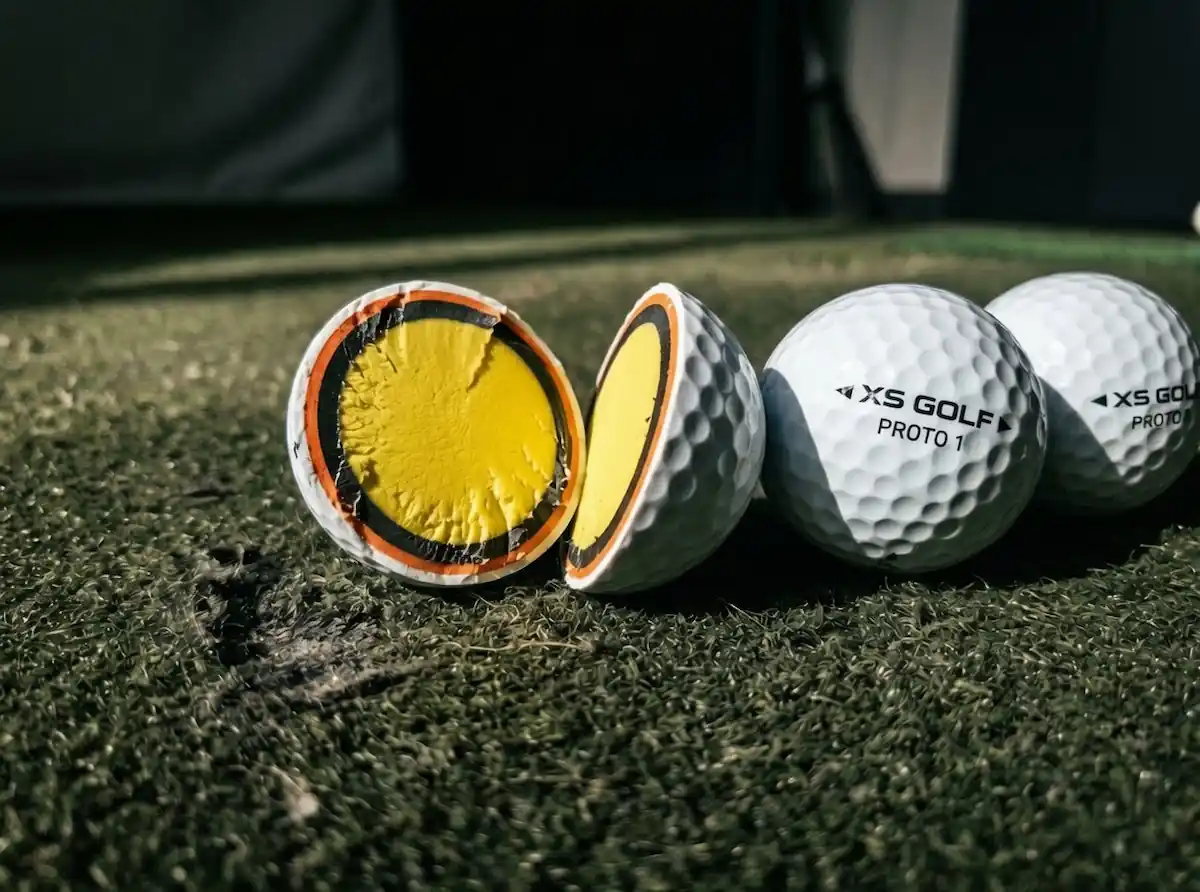
- Construction & Cover: A 3-piece ball with a urethane cover offers a “tour balance.” 4- and 5-piece golf balls offer more layers for optimized spin separation (e.g. low driver spin but high wedge spin). A urethane cover delivers the premium spin and soft feel serious players demand; Surlyn is the durable cover on most beginner and value golf balls.
Our Methodology
How to read these numbers: XS Golf does not currently run its own physical ball-testing lab. The figures and ratings below are synthesized from manufacturer specifications, published fitting and launch-monitor data, and aggregated owner and fitter reviews. Where a figure originates from a manufacturer claim rather than independent test results, treat it accordingly. Hands-on XS Golf testing is a 2027 commitment, not current practice. When published robot tests show gaps smaller than about 1 mph of ball speed or 2–3 yards of carry, we treat them as directional rather than decisive unless the same pattern shows up across several speeds and clubs.
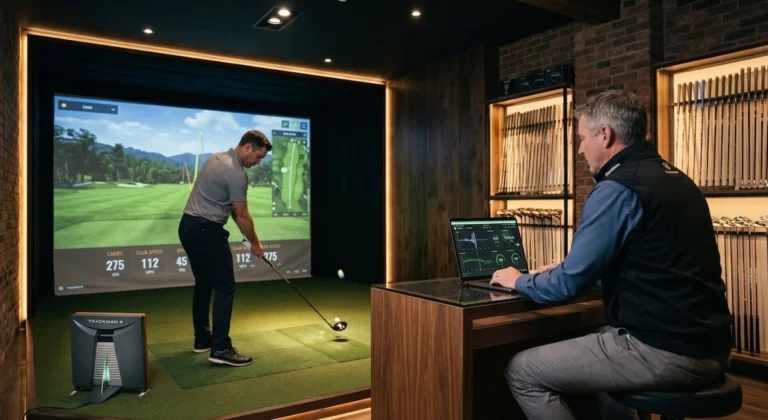
We organize the comparison across three swing speeds: < 85 mph • 85–100 mph • > 100 mph. Key metrics in the published test results we draw on are recorded on pro-grade launch monitors to capture:
- Driver carry and ball speed
- Driver spin rates
- 7-iron spin & launch
- Wedge spin & feel from 50 yards
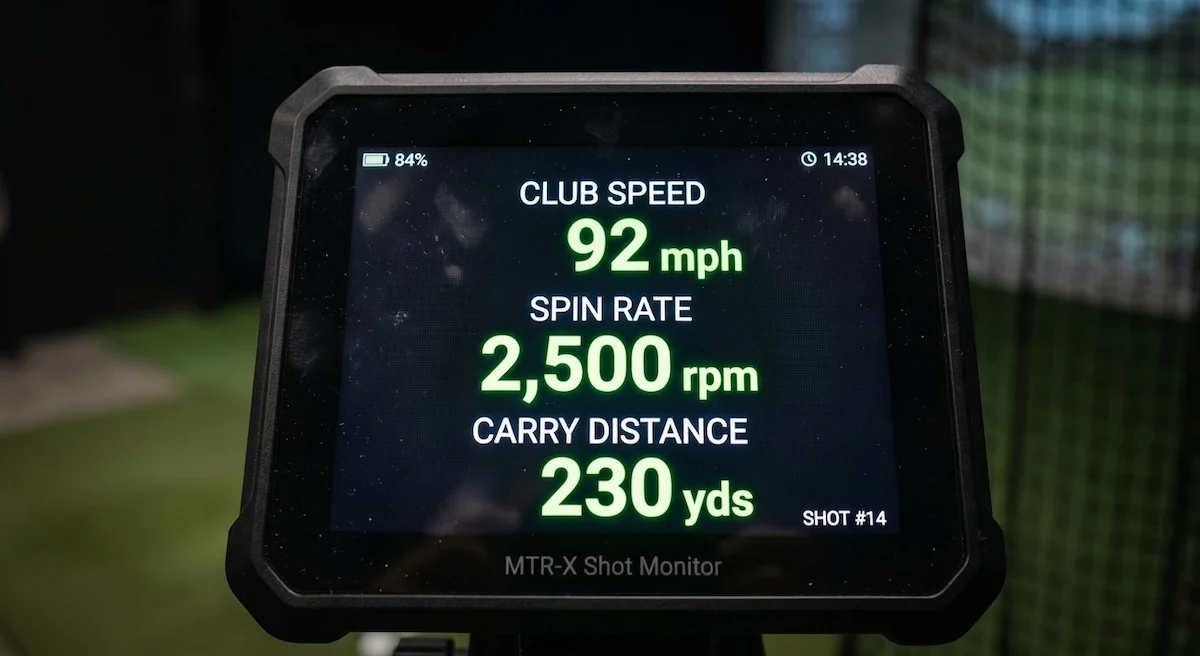
The right golf ball improves one or more of these metrics without severely hurting the others.
How to read golf ball test numbers
Robot tests like MyGolfSpy’s 2026 Golf Ball Test are the best public data golfers have. Taking the human out removes swing-to-swing noise and shows real differences in speed, spin and flight across 48 models. It also tempts you to read every decimal as a verdict.
Picture a 0.8 mph ball-speed gap, 150.5 against 149.7. On a ranked chart it looks decisive. As a percentage it is about half of one percent. MyGolfSpy ran its test on Golf Labs robots measured by Trackman, with a GCQuad running in parallel to catch robot drift and weather changes, and a calibration ball (Titleist Pro V1 Yellow) hit in every condition. Even with that much control, we treat gaps this small as directional, not decisive.
MyGolfSpy’s own numbers make the point. Off the 7-iron at mid speed, it reports the whole field separated by about 1.5 mph of ball speed, while the longest and shortest balls finished more than 10 yards apart. At high speed, the longest 7-iron it measured, Bridgestone’s Tour B RX, ranked 43rd of 48 for ball speed. Speed alone doesn’t explain distance.
What the 2026 data does show clearly, per MyGolfSpy:
- Soft is still slow. The 10 softest balls averaged about 3.5 mph less ball speed than the 10 firmest.
- Price tracks greenside spin closely and barely tracks distance, especially at slower swing speeds.
- On a wet full wedge shot, the ionomer balls gave up nearly a third of their spin.
- Flight doesn’t always carry over from club to club. A high-flying driver ball is not automatically a high-flying iron ball.
What to weigh instead of the smallest ranked gaps:
- Match compression and flight window to your actual swing speed.
- Look at 7-iron and wedge spin for scoring.
- Use driver distance as a tiebreaker among balls that already fit the rest of your bag.
- Check wet-wedge behavior if you play in anything but dry conditions.
- Trust patterns that repeat across speeds and clubs over a single chart.
That is how we read the published data behind the picks below. No ball is the longest or best for everyone. The job is to steer you away from the ones that work against your speed and your short game.
What Is Actually the Best Golf Ball?
Honest answer: there is no single best ball for everyone — only the best golf ball for your swing, your game, and your budget. If forced to name one, the Titleist Pro V1 is the safest first choice for the widest range of golfers — the most played ball in the world of professional golf.
But “safest” is not the same as “optimal.” A club golfer at 88 mph will often score better with a softer mid-compression ball, and a 108 mph player who spins the driver too much will usually be better served by a firmer, lower-spinning ball like the TaylorMade TP5x. The perfect ball matches your speed, your course conditions, and your short game.
That is the whole premise of this guide: the best golf balls are fitted, not defaulted to.
Quick Picks: The Best Golf Balls of 2026 at a Glance
Short on time? These are the best golf balls of 2026, category by category. The right fit makes a world of difference from tee to green — every ball below earned its place in your bag.
- Best golf ball overall: Titleist Pro V1 — the best ball in golf for the widest range of golfers, with world-class wedge spin.
- Best golf ball for fast swings: TaylorMade TP5x — low driver spin and high wedge spin for 100+ mph swings.
- Best value golf ball: Bridgestone e12 Speed — among the longest two-piece balls in published testing.
- Best premium golf ball for the money: Maxfli Tour — the smartest balance of performance and price.
- Best distance golf ball on a budget: Titleist Velocity — a pure distance golf ball, long off the tee.
- Best golf balls for slower swing speeds: Callaway Supersoft and Srixon Soft Feel — easy launch, very soft feel.
- Best golf balls for beginners: Bridgestone e12 Speed and Callaway Warbird Distance+ — straight, forgiving, affordable.
- Best bulk buy: Kirkland Signature Performance+ V3.0 — a urethane ball at a per-ball price the big brands can’t touch.
2026 Premium Tour Ball Comparison
| Ball | Layers | Approx. Compression | Best For Swing Speed | Driver Spin | Short-Game Spin | Standout Trait | XS Golf Rating | Price (doz) |
|---|---|---|---|---|---|---|---|---|
| Titleist Pro V1 | 3 | 87 | 90–105 mph | Mid | High | Best all-round balance & wind performance | 9.5/10 | ~$54 |
| TaylorMade TP5x | 5 | 97 | 100+ mph | Low | High | Lower driver spin for fast swings | 9.3/10 | ~$54 |
| Callaway Chrome Tour | 4 | ~90–95 | 95+ mph | Low-Med | High | Excellent ball speed & consistency | 9.1/10 | ~$50 |
| Srixon Z-Star XV | 4 | ~100 | 100+ mph | Low | High | Strong distance + spin separation | 9.0/10 | ~$48 |
| Bridgestone Tour B X | 4 | High | 105+ mph | Low | High | Firm feel, penetrating flight | 8.8/10 | ~$50 |
Key Takeaways & Comparisons
- Spin control for fast swings: The TaylorMade TP5x is our pick for 100+ mph players who need less driver spin. TaylorMade says it redesigned the core to reduce driver spin, and National Club Golfer’s review found lower spin than the TP5 across every club tested. MyGolfSpy’s 2026 test did not put it among the fastest balls off the driver, so choose it for its spin profile and fit, not for a guaranteed distance gain.
- The Gold Standard: The Titleist Pro V1 remains the most consistent all-around performer for the majority of serious amateurs (90–105 mph). It offers a penetrating flight in the wind and reliable spin everywhere on the golf course.
- The Challengers: Callaway Chrome Tour and Srixon Z-Star XV sit right in the mix, trading blows with the big two on raw ball speed.
- The Speed Threshold: Higher-compression golf balls (TP5x, Z-Star XV, Tour B X) actively reward faster swings, but they lose their advantage if you swing below ~95–100 mph.
Recommendations by Swing Speed
These picks put overall fit (compression, flight window and short-game spin) ahead of any single metric from one test condition. Fitting by three swing speeds is the fastest shortcut to the right golf ball. Find your bracket below.
Under 85 mph (Seniors, Beginners, Slower Swing Speeds)
Prioritize a low compression rating (35–70) for an easy launch, a very soft feel, and effortless yardage. Low compression golf balls are genuinely beneficial for players with slower swing speeds: these golf balls prevent the harsh “rock” feel of a firm premium ball and actually deliver more distance for slower swingers.
Top golf balls: Callaway Supersoft, Srixon Soft Feel, Titleist Tour Soft, the Velocity, Srixon Q-Star Tour, Bridgestone Tour B RX.
85–100 mph (The 8–18 Handicap Sweet Spot)
This is where most of our readers sit — the classic moderate swing speed bracket. You need a balanced mid-compression ball with good spin separation. Switching from a random, overly firm “tour” ball to one of these will yield the biggest instant improvement in your game.
Top golf balls: Titleist Pro V1 (our highest-rated all-rounder), TaylorMade TP5 (softer feel than the TP5x), Callaway Chrome Tour or Chrome Soft, Srixon Z-Star, Maxfli Tour.
Over 100–105+ mph (Low Handicap Players, Fast Swingers)
You have the speed to compress a firmer core. You need higher compression, low driver spin, and high short game spin. If you swing over 103 mph and fight too much driver spin, the TP5x is our top recommendation: Today’s Golfer describes a flatter, more penetrating flight, and you keep tour-level greenside control.
Top golf balls: TaylorMade TP5x, Titleist Pro V1x, Callaway Chrome Tour X / Triple Diamond, Srixon Z-Star XV, Bridgestone Tour B X.
How to Read a Golf Ball Spec Sheet
Every ball on the shelf advertises three things: compression, layers, and cover. Read them right and you can size up any ball in seconds — golf balls are the easiest golf equipment for club golfers to fit once you know the code.
Compression tells you how much speed the ball needs. A 40-compression ball suits slower swing speeds; a 100-compression ball wants a fast, aggressive move. Play the wrong number and the ball either feels like a marshmallow or a rock.
Layers tell you how the ball separates spin. A two-piece ball behaves the same off every club — long and low-spin. A four- or five-piece ball can be low-spin off the tee yet grabby around the green, which is the whole trick behind a modern premium golf ball.
Cover tells you how the ball feels and stops. Urethane means spin and control; Surlyn means durability and distance. That single line on the box predicts short-game performance better than any ad campaign.
Read those three specs together and you can shortlist the right golf ball for your game — and that makes all the difference.
Bridgestone Tour B Golf Balls, Explained
The Bridgestone Tour B line confuses a lot of club golfers because four golf balls share one name. The decoder: X golf balls are for 105+ mph, RX for under 105; an S suffix means extra spin and a softer cover.
Tour B X and Tour B XS (105+ mph)
The Tour B X is the distance and wind ball of the family — firm, low-spin off the driver, with a penetrating flight. The Tour B XS (Tiger Woods’ ball) trades a little speed for extra spin and a softer feel on wedges. Both are premium golf balls for fast swingers.
Tour B RX and Tour B RXS (under 105 mph)
The Bridgestone Tour B RX brings tour construction to a moderate swing speed: easier compression, good distance, and real greenside performance. The B RXS adds a softer cover and more spin for golfers who want the ball to check up around the green. For many club golfers, the RX golf balls are the smartest way into the Bridgestone Tour range.
Best Value Golf Balls in 2026
Not everyone needs to spend $54 a dozen. These are the best golf balls per dollar for club golfers — several punch far above their price.
Kirkland Signature Performance+ V3.0 — Best Bulk Value
The Kirkland Signature Performance+ is a three-piece cast-urethane ball. BallCaddie listed it at $29.99 for two dozen in Costco warehouses and $39.99 shipped from Costco.com in August 2026, roughly $1.25 a ball in store. In MyGolfSpy’s 2026 ball test, the yellow version was among the five highest-spinning balls off the driver at high swing speed, and the white version spun noticeably less, so pick one color and stick with it. MyGolfSpy also says its greenside spin has dipped appreciably across recent tests. Great value for the money. Cons: at high driver speed MyGolfSpy had it inside the top 20 for ball speed but near the bottom third for distance, and it sells out fast at Costco.
Bridgestone e12 Speed — Best Value Overall
The Bridgestone e12 Speed is the best value golf ball in the published test data we reviewed. Published robot testing has reported it among the longest two-piece balls, and it excels in tee to green performance. This ball launches easy, flies straight from tee to green, and gives high handicap golfers good distance without demanding speed. Excellent value for the money. Cons: as a low-spin two-piece ball, it will never stop like a urethane model on firm greens.
Maxfli Tour — Premium Performance, Mid Price
The Maxfli Tour gives you a urethane cover and premium construction at a mid-tier price. MyGolfSpy’s 2026 picks name it the mid-tier value pick: it produced strong full wedge spin and kept nearly all of it in wet conditions. For club golfers who want premium performance without the premium invoice, it is our value pick among urethane balls.
Callaway Supersoft — Best for Moderate Swing Speed on a Budget
The Callaway Supersoft is a budget-friendly golf ball built for a moderate swing speed and below. The ball has a very soft feel, launches high, and flies straight — a forgiving, distance golf ball that many golfers keep in the bag as their everyday ball.
Titleist Velocity — Best Pure Distance Golf Ball on a Budget
The Titleist Velocity golf balls are priced around $30 and offer good distance above almost everything else at that price. In MyGolfSpy’s 2026 ball test it finished first for total driver distance at mid swing speed, though it dropped to 12th on carry once roll was taken out. The Velocity is a firm, low-spin two-piece ball, so expect a clicky feel and modest spin around the green — but off the tee, this ball flies. If more distance is your only goal, this ball belongs on your shortlist.
Vice Tour and Vice Pro — Direct-to-Consumer Golf Balls
Vice built its name on selling premium-quality golf balls online for less. The Vice Tour is a three-piece Surlyn ball for everyday play at a bargain bulk price, while the Vice Pro steps up to urethane and real wedge spin. Buy the Vice Tour for practice; buy the Vice Pro when the score matters.
Premium vs. Budget Golf Balls: What You Actually Pay For
Premium golf balls typically cost around $50–$60 per dozen; budget golf balls often range from $25–$35 per dozen. Here is what the gap buys.
- Cover material: Premium golf balls usually have a urethane cover for spin control, shot-shaping, and stopping power. Budget golf balls typically use durable Surlyn, which improves durability and cuts spin.
- Construction: Premium multi-layer golf balls are designed to maximize distance, control, and feel at the same time. Budget golf balls often use a two-piece construction tuned purely for distance.
- Who benefits: Premium golf balls provide better performance for skilled players who can exploit the extra wedge spin. High handicappers lose most of that benefit — and lose the golf balls themselves.
- Visibility and durability: Modern urethane covers hold up well, and the durability and visibility of golf balls can both be improved with tougher covers and high-visibility yellow finishes.
The honest rule: if your handicap is falling and your short game is sharpening, move up to a premium golf ball. If you lose four golf balls a round, the rest of the argument is academic — don’t blow $60 a dozen. Play the value ball and bank the savings.
Best Golf Balls for Beginners & High Handicappers
Beginners should use soft, low-compression two-piece golf balls to maximize yardage and minimize sidespin. Two-piece golf balls are designed for high launch, low spin, and straight distance — exactly what a developing swing needs. High compression golf balls, by contrast, are suitable only for golfers with fast swing speeds — not for high handicap golfers.
Bridgestone e12 Speed — Best Overall for Beginners
The same qualities that make it the best value ball make the e12 Speed the best beginner ball going for high handicappers: long, straight, forgiving, and cheap enough to lose without pain.
Callaway Warbird Distance+ — Maximum Forgiveness
The Callaway Warbird Distance+ offers strong performance for beginners at a rock-bottom price: a big-core, two-piece distance ball that rewards even mishits, ball after ball.
Titleist Tour Soft — Best Short Game for Beginners
The Titleist Tour Soft excels in short game performance for beginners — a soft feel, decent greenside grab for a non-urethane ball, and Titleist consistency dozen after dozen.
Kirkland Signature Performance+ V3.0 — Budget Urethane
For the beginner who already loves chipping, the Kirkland Signature Performance+ V3.0 puts a urethane cover in your hands at a budget price. MyGolfSpy notes its greenside spin has dipped in recent tests, so treat it as a cheap way into urethane rather than a spin leader.
Srixon Q-Star Tour — Best for Approach Play
The Srixon Q-Star Tour is great for approach play for beginners with a bit of speed: a urethane-covered ball at a mid-tier price, so approach shots hold the green instead of bounding over it.
What About Colored Golf Balls?
Colored golf balls are not a gimmick. A yellow ball is measurably easier to track in flight and to find in rough, which is why yellow has become the default second color across the sport for nearly every major model — Pro V1, TP5, Z-Star, Soft Feel, and e12 all come in yellow.
Performance is identical: the yellow ball stops and flies like the white ball, so choosing colored golf balls is purely personal preference. Golfers with aging eyes swear by yellow; matte red and orange work in frost or leaves. Rest assured, the paint does not change the physics.
Common Golf Ball Buying Mistakes
Playing whatever ball you find. Found golf balls turn your bag into a lottery. Every ball reacts differently off the tee and around the green. Pick one ball and stick with the ball for at least a month of play.
Copying the pros. The best golfers in the world swing 115+ mph; most club golfers do not. A ball built for that speed punishes a mid-speed swing with lost yards and a harsh feel.
Buying on price alone. The cheapest dozen of golf balls is not the best deal if the ball costs you strokes around the green, and the most expensive dozen is wasted if you can’t compress the ball. Value is fit, not price.
Ignoring the short game. Plenty of golfers pick a ball off the tee alone. But you hit far more shots inside 100 yards, where wedge spin and short-game performance decide whether the ball stops next to the flag or releases off the green.
Never re-testing. Swing speeds change, and golf balls change model years. The ball that fit you at 95 mph may be wrong at 88. Re-check the fit every season or two — for club golfers, the right ball is the cheapest upgrade in golf.
Head-to-Head Highlights (What Actually Moves the Needle)
- Distance (Driver): Swing speed changes the order. In MyGolfSpy’s 2026 ball test, the Pro V1 finished first for total distance at slow driver speed. At high speed the fastest balls off the driver were the Callaway Chrome Tour X, Chrome Tour Triple Diamond, Wilson Staff Model X and Maxfli Tour X, which MyGolfSpy calls statistically inseparable.
- Iron Spin & Stopping Power: Pro V1 and Chrome Tour are extremely consistent. Published reviews note the TP5x launches slightly higher with mid-irons.
- Wind Performance: MyGolfSpy’s 2026 picks list the Pro V1 as the lower-flight, higher-spin tour ball, and a flatter flight holds up better into the wind. Higher-launch golf balls can occasionally balloon in strong headwinds.
- Feel: The Pro V1 generally feels softer off the putter face and wedges than the TP5x. Feel is entirely personal preference — you need to putt each ball yourself.
- Durability: All modern premium golf balls with urethane covers hold up well for a full round unless you skull wedges constantly.
Practical Fitting Advice (Especially Useful with a Simulator)
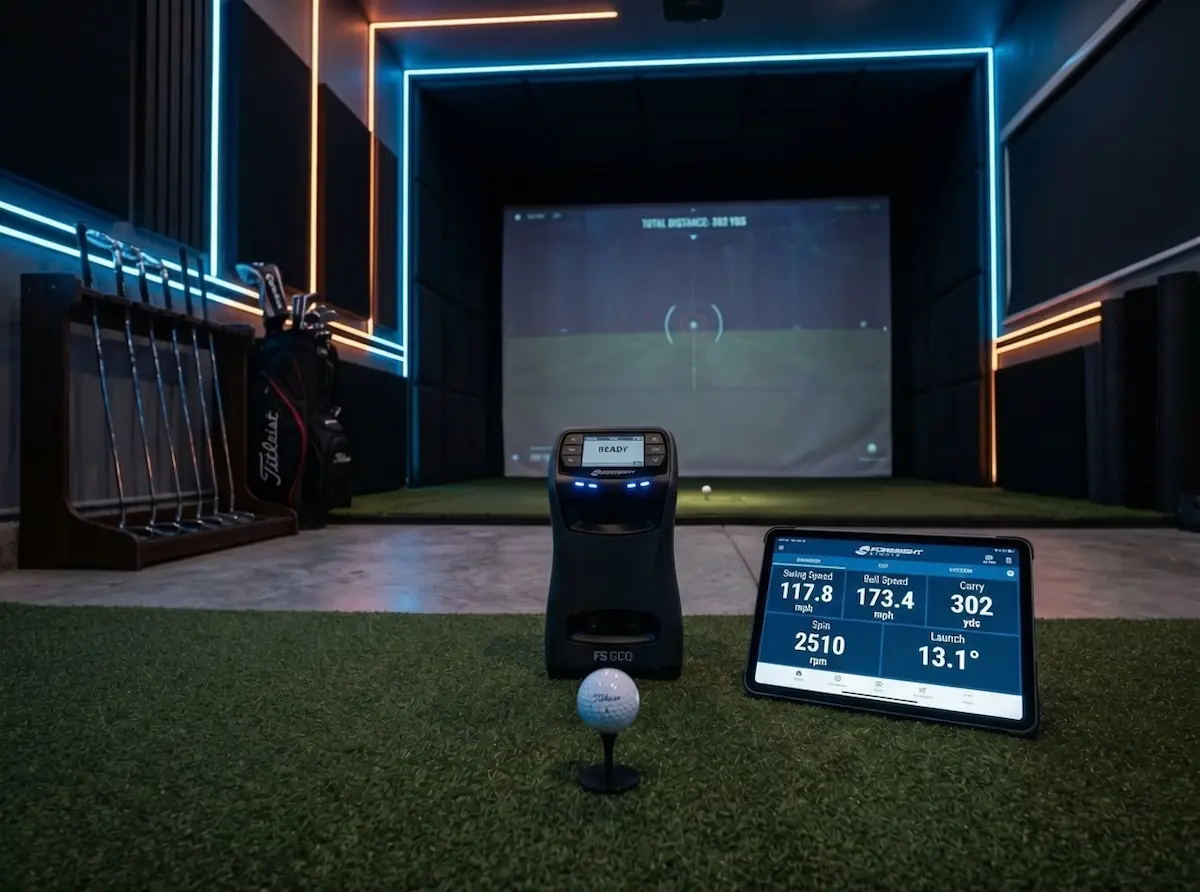
- Measure your swing speed: Use a reliable launch monitor. If you are building a home setup, refer to our research of the Rapsodo MLM2PRO, Square Golf, or TrackMan to get your baseline numbers.
- Test on the course or sim bay: Hit 5–10 driver shots, a few 7-irons, and wedges with 2–3 different golf balls. Look at carry, dispersion, and descent angle into the green. Structured comparison beats trial and error every time.
- Consider your typical conditions: Play firm/fast courses or links golf? Slightly lower spin helps. Play soft conditions with elevated greens? A higher-spin ball earns its keep.
- Simulator Note: Use the ball you actually play outdoors! If you are using a radar unit indoors (like the Garmin R10 or MLM2PRO), you must use RCT/RPT-marked golf balls for accurate spin. Your sim data is only useful if it reflects real on-course performance.
- Budget Reality: Premium golf balls cost $48–$55 a dozen. They perform better and feel better. However, value golf balls (Supersoft, Srixon Soft Feel) are excellent if you are prone to losing multiple golf balls a round.
Other Categories Worth Considering
- Best pure value / distance golf balls: Callaway Supersoft, Srixon Soft Feel, Titleist Velocity, Pinnacle (for high handicap or casual play).
- Best soft feel golf balls: Callaway Chrome Soft and Titleist Tour Soft — both deliver a very soft feel with playable spin.
- Maximum spin / stopping power: Srixon Z-Star Diamond (high spin and higher flight for approaches), Callaway’s firmer models, or the high spin Pro V1x in specific conditions. When you need more spin into firm greens, these are the go-to golf balls.
Ready to Choose?
Start with your swing-speed bracket above. The “best” golf ball is the ball that gives you the best combination of distance you can access and spin control you can trust. For most serious amateurs, that means the Titleist Pro V1 or TaylorMade TP5/TP5x; for value-minded club golfers, the Maxfli Tour and Bridgestone e12 Speed; for pure distance, the Titleist Velocity.
Buy a sleeve before you buy a dozen of any ball, test with your own clubs, and let your wedge and driver numbers — not the marketing — make the call. There is no perfect ball in the abstract, only the perfect ball for your game. The right golf ball will not fix a broken swing, but the right ball makes all the difference at the margins where scores actually break through.
Now go hit some golf balls — and make sure they’re the right ones for your swing.
Frequently Asked Questions
What is the best golf ball for the average golfer?
The average golfer swings the driver around 90–95 mph, which puts the Titleist Pro V1, TaylorMade TP5, and Maxfli Tour at the top of the list. If budget matters more than wedge spin, the Srixon Soft Feel and Callaway Supersoft are budget golf balls with good distance and a soft feel for half the price.
What is the best golf ball for today’s golfer?
Today’s golfer has more genuinely good options than ever. Premium golf balls still lead for overall performance, but brands like Vice and Kirkland have closed the gap dramatically. The modern answer: fit the ball to your three key numbers — driver speed, driver spin, wedge spin — and today’s market has a great option at every price.
What is the easiest golf ball to hit straight?
Low spinning two-piece golf balls are the easiest to keep in play off the tee, because less sidespin means less curve. The Bridgestone e12 Speed, Titleist Velocity, Callaway Supersoft, and Callaway Warbird Distance+ are the straightest-flying golf balls in this guide for club golfers fighting a slice or hook.
How do I know which golf ball is best for my swing speed?
Match compression to your driver swing speed. Under 85 mph → low-compression soft golf balls (e.g. Callaway Supersoft). 85–100 mph → balanced mid-compression golf balls like the Titleist Pro V1. Over 100 mph → higher-compression, lower-spin golf balls like the TaylorMade TP5x.
What’s the difference between Titleist Pro V1 and TaylorMade TP5x?
The Pro V1 is our highest-rated all-round performer for most serious amateurs (90–105 mph swings) thanks to its consistent spin, penetrating flight in wind, and excellent short-game feel. The TP5x is built for swings over 100 mph, with lower driver spin and a flatter flight while keeping high wedge spin. It suits fast players who spin the driver too much; it is not a guaranteed distance gain over the Pro V1.
Do I really need to test golf balls or can I just buy what the pros use?
Most amateurs swing slower than tour players. Using a ball designed for 110+ mph swings when you swing 85 mph usually costs you distance and feel. The data across all three brackets shows meaningful differences in carry, spin, and control.
Are premium urethane golf balls worth the extra money?
For 8–18 handicap players who want consistent spin, better stopping power on approaches, and reliable feel, yes. A premium golf ball performs noticeably better than value options for scoring rounds. Use good value golf balls (Supersoft, Srixon Soft Feel) for practice and casual play if you lose a lot of golf balls.
Can I use the same golf ball in my home simulator as I play on the course?
Yes — and you should. Using a different ball gives you misleading data. For radar-based launch monitors indoors, consider RPT-marked golf balls for accurate spin readings.
How does XS Golf compare golf balls?
We compare golf balls across three swing speeds (<85 mph, 85–100 mph, >100 mph), focusing on driver carry, driver spin, 7-iron spin, and wedge performance from 50 yards, using synthesized manufacturer and independent fitting data.
What if I lose a lot of golf balls — should I still buy premium ones?
Use a smart mix: premium golf balls (Pro V1, TP5x) for serious rounds and scoring, and high-quality value golf balls for practice, range sessions, and casual play.
Will switching to the right golf ball actually lower my scores?
The right ball can. Better distance control off the tee, more consistent iron spin, and improved short-game stopping power all help you hit more greens and get up-and-down more often.