Golf Club Fitting Guide for Intermediate Golfers (8–18 Handicap): What to Expect, How to Prepare & Is It Worth It in 2026
Last updated: September 19, 2026
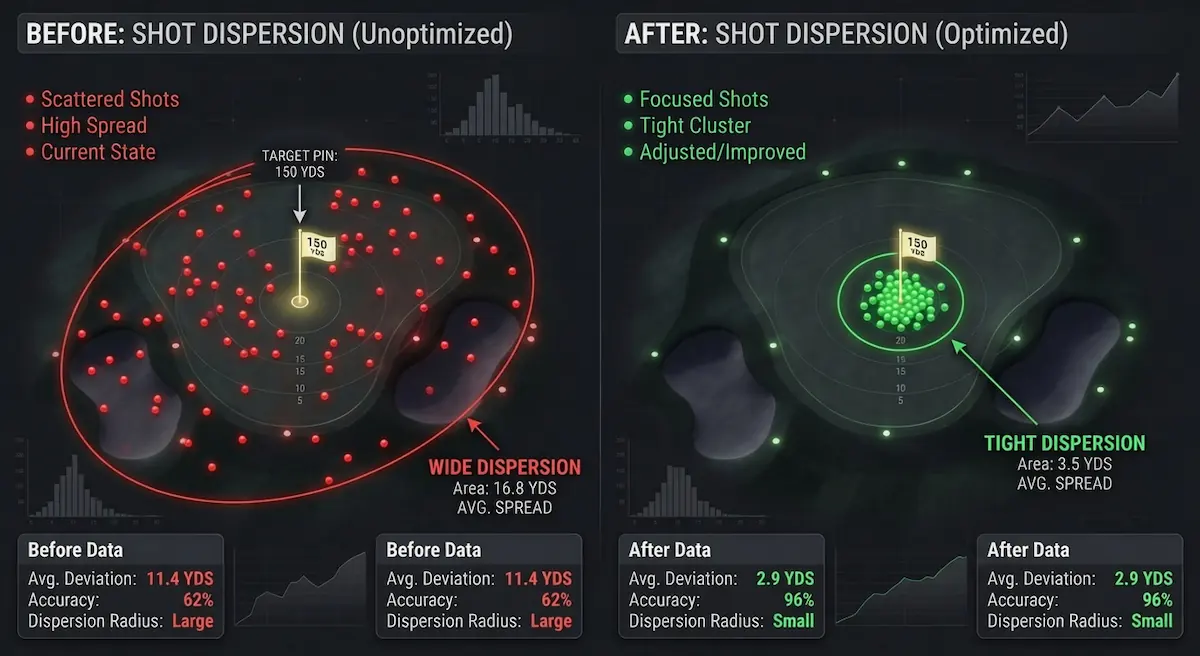
If you’re an 8–18 handicapper with a reasonably repeatable swing, a properly fitted set is one of the higher-ROI equipment decisions you can make. It won’t rebuild your swing — but dialing in your exact specs is consistently linked to tighter dispersion and better distance control, and a large industry survey found that 94% of golfers who got fit were at least satisfied with the result. (Be skeptical of anyone promising a specific “3–5 strokes per round” — that figure gets repeated a lot, but rigorous, isolated data on exact stroke savings is thin. Treat it as a directional claim, not a guarantee.) For the full process — the six specs fitters analyze, typical session costs, and the launch monitor technology involved — see our complete step-by-step custom club fitting guide.
Search “golf club fitting near me” and you’ll get a chaotic mix of big-box retailers, premium boutique builders, and local pros. Walk in blind and it’s easy to end up buried in data, nudged toward upsells, and second-guessing the bill.
How XS Golf approaches this: our analysis is built on research and synthesis — cross-referencing manufacturer specs, launch-monitor data, and aggregated owner and expert reviews. We don’t run a physical fitting bay (our testing lab, tester panel, and re-test program are forward commitments scheduled for 2027 — more on that at the end). What we can do is give you the clearest, most honest roadmap for your next fitting, and show you how to walk in already holding your own baseline numbers.
Why Club Fitting Matters More for Intermediates Than Anyone Else
Beginners benefit from almost any decent fit that corrects glaring length or flex problems. Scratch golfers and tour pros are usually already in highly optimized setups. The 8–18 bracket sits in the sweet spot: you have enough consistency for small spec changes to produce outsized gains, but you’re likely leaving yardage and accuracy on the table.
Where small changes tend to pay off most for mid-handicappers:
- Shaft weight & flex. Fitters commonly report that a shaft that’s too heavy or too stiff can cost a mid-handicapper several mph of swing speed — and with it, carry distance.
- Lie angle. A lie angle that’s too upright tends to push shots left; correcting it can tighten dispersion without a single swing change.
- Launch conditions. Putting a low-spin “tour” head on a ~90 mph swing can make the ball fall out of the sky, costing meaningful carry.
Common patterns reported among 8–18 handicappers: inconsistent gapping (especially 4-iron through hybrids), driver spin or launch mismatched to swing speed, a shaft that fights the player’s tempo, and scattered contact that the right head-and-shaft combo can help stabilize.
What Actually Happens in a Professional Fitting (Step-by-Step)
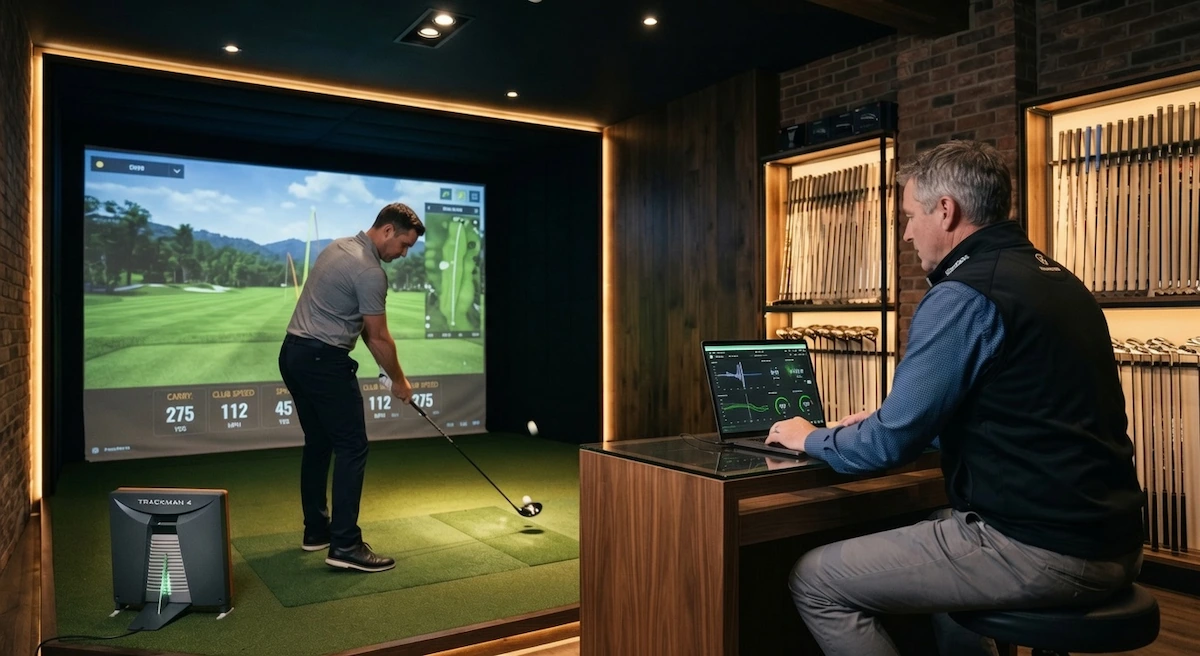
A premium 2026 fitting (Club Champion, GolfTEC, True Spec, or a strong certified local fitter) leans on optical or radar launch monitors — TrackMan, Foresight GCQuad — to capture your delivery. The typical flow:
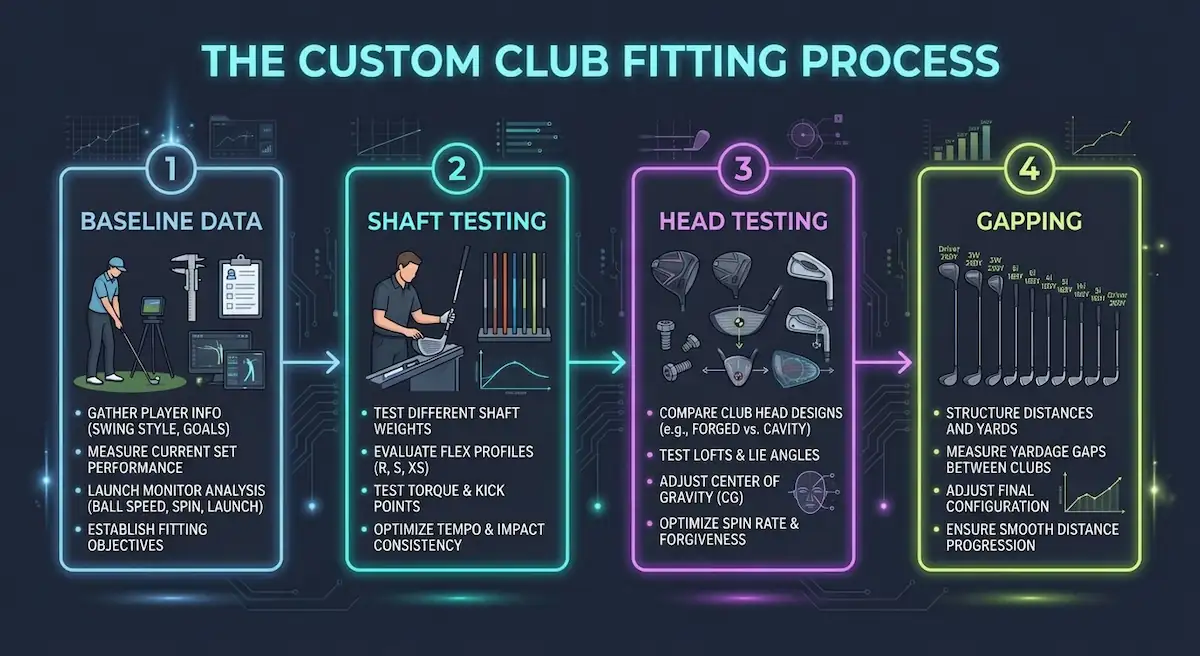
1. Baseline interview & warm-up. You’ll hit roughly 15–20 shots with your current “gamer” driver and a mid-iron while the fitter establishes your baseline: club speed, ball speed, smash factor, launch angle, and spin rate.
2. Shaft testing (the engine). Before changing the head, the fitter swaps shafts on a standardized head, hunting for the weight and flex profile that optimizes your launch and spin while helping you find the center of the face.
3. Head testing (the chassis). With the shaft dialed in, you’ll test several heads across manufacturers, optimizing energy transfer (smash factor), ball speed, and visual confidence at address.
4. Gapping & confirmation. For a full-bag fit, the fitter checks distance gaps so you don’t have two clubs going the same yardage — generally aiming for roughly 10–15 yards between irons.
Most sessions run about an hour for a single category and roughly 2–4 hours for a full bag, followed by a custom build (typically a couple of weeks).
How to Prepare Like a Pro — Especially With a Home Simulator
This is where XS Golf readers have the edge. Don’t walk into a fitting bay cold.
Before your fitting:
- Hit 20–30 shots with your current clubs on your home golf simulator or a portable launch monitor.
- Record the numbers that matter: club speed, ball speed, smash factor, launch angle, spin rate, attack angle, and dispersion.
- Note your typical misses and what you actually want to fix — more carry, tighter dispersion, better gapping, more stopping power on approaches.
Pro move: bring a printed or screenshot summary of your baseline. Fitters work faster and dig deeper when you arrive data-driven.
Physical prep checklist: wear the shoes and pants you normally play in; warm up properly; bring your current clubs even if you plan to replace most of them; and know your current grip size and any physical limitations (back, wrist, etc.).
Optimal Launch-Monitor Numbers for Mid-Handicap Golfers (Reference Table)
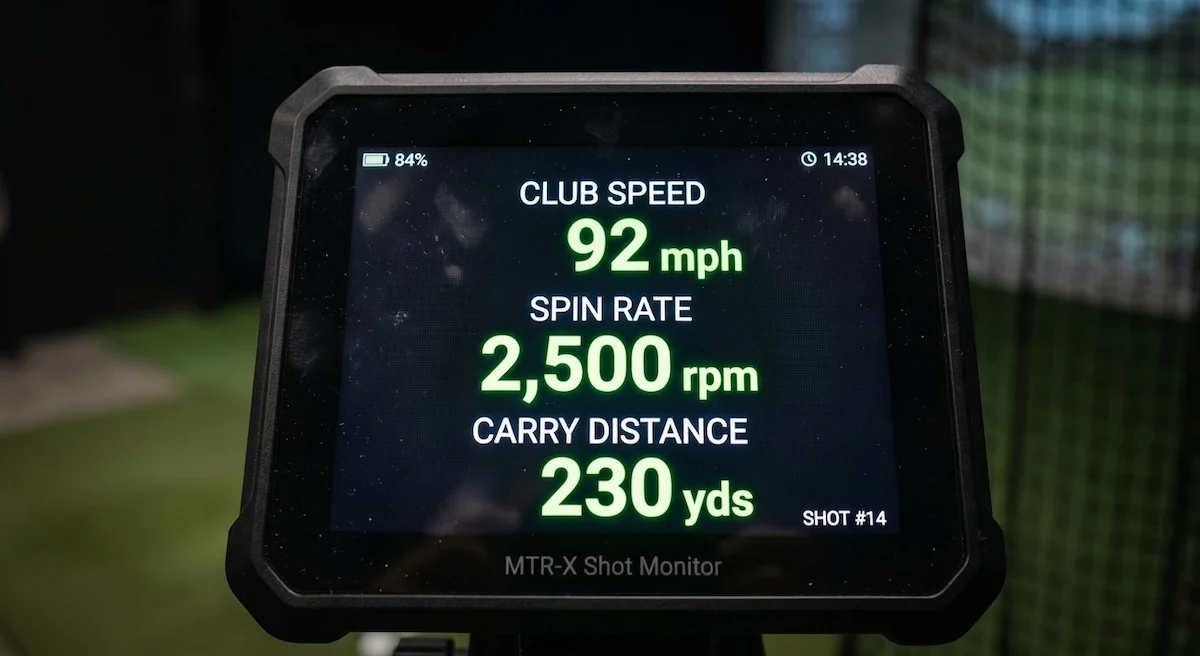
These are approximate, synthesized starting-point ranges for a roughly 90–95 mph driver swing, aggregated from publicly reported launch-monitor optimization data. They are not measured by XS Golf, and your optimal numbers will shift with your swing speed and angle of attack. Use them to set goals for your fitting — not as hard targets.
| Club | Avg. Club Speed | Optimal Launch | Optimal Spin | Est. Carry |
|---|---|---|---|---|
| Driver | 90–95 mph | 12–15° | 2,200–2,900 rpm | 215–240 yds |
| 3-Wood | 85–90 mph | 10–13° | 3,500–4,500 rpm | 195–215 yds |
| 5-Iron | 80–85 mph | 14–17° | 5,000–6,000 rpm | 170–185 yds |
| 7-Iron | 74–78 mph | 16–20° | 6,500–7,500 rpm | 148–165 yds |
| Pitching Wedge | 64–68 mph | 24–28° | 8,500–10,000 rpm | 110–130 yds |
Club Champion vs. GolfTEC vs. Alternatives — Honest Comparison for Intermediates
The custom-fitting market is growing steadily, driven by rising adoption of personalized equipment — though analyst estimates of its exact size vary widely, so treat any single headline number with caution. Here’s how the major players compare for mid-handicappers, based on aggregated reviews and publicly available information.
Club Champion
Strengths: the deepest inventory in the business — the company states it offers more than 65,000 hittable head and shaft combinations across 65+ brands, including boutique names like PXG that are hard to test elsewhere. Master Fitters use TrackMan and SAM PuttLab. Club Champion also advertises a 90-day “Perfect Fit” guarantee.
Watch-outs: because clubs are hand-built with aftermarket shafts and grips, the final bill can climb fast — a full custom bag can run into the thousands. Some owner reviews mention upsell pressure.
Verdict for 8–18 hcp: best if you want maximum options and intend to buy the build.
GolfTEC
Strengths: integrates fitting with swing coaching via its TECFIT system — strong for players actively taking lessons and changing mechanics at the same time. Often a little more affordable than Club Champion.
Watch-outs: somewhat less exotic-shaft variety, leaning on major OEM stock and custom options.
Verdict for 8–18 hcp: great if you want lessons bundled with your fitting.
Alternatives
- True Spec Golf — premium, brand-agnostic model similar to Club Champion, often at green-grass facilities.
- Brand-specific fittings (Titleist, Ping, TaylorMade) — frequently free or fee-credited toward purchase, and excellent for what they are, but you only test one brand.
XS Golf recommendation: want maximum shaft/head options and have the budget for a custom build? Find a Club Champion. Want coaching bundled in? GolfTEC. Either way, do your homework with home-simulator data first.
Is Custom Fitting Worth It? (Cost vs. Real ROI)
Fitting fees typically range from about $50 to $350 depending on scope (driver-only vs. full bag), and many retailers credit the fee toward a purchase. If you buy a full custom build with aftermarket shafts and grips through a premium fitter, the total commonly lands in the $3,500–$5,000+ range.
It’s worth it if you play regularly (say, 10+ rounds a year), have reasonably repeatable contact, and are willing to practice with the new specs. Realistic gains: tighter dispersion, optimized launch and spin for your speed, cleaner gapping, and more confidence over the ball.
Wait if your contact is still very inconsistent, you’re mid-overhaul on your swing mechanics, or you only play a handful of times a year. A $4,000 build doesn’t fix a swing that’s about to change.
Post-Fitting: How to Actually Get Better
New clubs are step one, not the finish line. When they arrive:
- Validate your new carry yardages on your home simulator or a local launch-monitor bay.
- Update the gapping in your GPS watch or app.
- Give the specs 4–6 weeks of structured practice before you judge them.
- Consider a quick check-up fitting in 12–18 months if your swing changes meaningfully.
Custom fitting isn’t magic — but for most committed intermediate golfers, walking in prepared with your own data makes it one of the smartest equipment moves you can make.
FAQs
How long does a golf club fitting take?
Roughly 2–4 hours for a full bag, or about an hour for a single club (like a driver).
Do I have to buy the clubs at the fitting?
No. You pay a fitting fee for the data and the fitter’s time, and you’ll leave with a custom spec sheet — so you can buy the clubs wherever you like.
Can I use my own launch-monitor data?
Yes, and you should. Bringing baseline numbers from your home simulator helps the fitter read your tendencies immediately and speeds up the session.
What’s the typical total cost for a full-bag fitting plus clubs?
The fitting fee is usually around $50–$350. A full custom build with aftermarket shafts and grips through a premium fitter often totals $3,500–$5,000+.
How often should intermediates get refitted?
Most fitters suggest every 3–5 years, or sooner after a significant change in swing mechanics, fitness, or physical condition.
Take the Next Step with XS Golf
Want a home simulator to dial in your numbers before and after fitting? Start here → Best Home Golf Simulators 2026 or our Garage Build Guide Under $5,000.
Looking for clubs that perform for 8–18 handicappers? See our research and spec comparisons → Best Golf Clubs for Intermediate Players 2026.
A note on our method: XS Golf’s physical testing lab, multi-tester panel, and blind-testing protocols are scheduled to launch in 2027. Until then, our analysis relies on expert synthesis, manufacturer specs, and aggregated owner and expert data — every number above is attributed to that approach, not first-party testing. We plan to introduce affiliate links in the future; when we do, they’ll be clearly disclosed, and payout structures will never influence our recommendations.