Beyond the Flat Mat: Moving Golf Simulator Floors Compared
Published: November 23, 2026 · Last updated: November 23, 2026
Your approach finds a sidehill lie. The screen shows the ball above your feet. On a flat mat, you can still take the same stance you used on the tee. A moving golf simulator floor changes that shot before the launch monitor sees the ball.
Choose the surface by the shot you want to practice. A swing plate tilts the turf under your feet and the ball. A moving putting green changes the ground the ball rolls across. A hybrid lets you hit and putt on the same platform. For a garage build, the first question is whether you have room to swing from the high side. For a teaching studio, it’s whether you can repeat the same lie for the next student. Compare the 13 product lines below.
Which moving golf floors handle full swings, putting or both?
The prices below are in US dollars. The last column tells you what each figure buys. A platform, a projected putting system and a finished simulator room carry very different installation costs.
| System and source | What moves | US price basis |
|---|---|---|
| Zen Swing Stage / Swing Stage 2.0 | Tilts the hitting surface. Stage 2.0 requires a recess. | Earlier Swing Stage only, 2025 list: $19,450 recessed or $21,175 on-floor. Request current Stage 2.0 quote. |
| PLATFORM TruePR | Full swings on changing lies, up to 5% grade. | From $19,995 in the November 2 guide. Confirm installed price. |
| Perfectstroke Hitting Platform | Flush-mounted square for sloping-lie instruction. | Request a model-specific quote. |
| GOLFZON TwoVision / TwoVisionNX | Course-driven plate in a GOLFZON bay. | Dealer quote. Check Dual Plate or Motion Plate on the equipment list. |
| Golf VX T2 / FA / Quantum | Swing plate in the Golf VX simulator family. Confirm model configuration. | Request a complete-system quote. |
| System and source | What moves | US price basis |
|---|---|---|
| Zen Green Stage | Adjustable putting surface in several lengths. | 2025 list: $30,945–$43,615 across sizes and mounts. Request current quote. |
| PLATFORM TrueBreak | Powered green for putting and green-reading lessons. | From $24,995 in the November 2 guide. |
| Perfectstroke Putting Platform | Putting surface with projected lines. | US$16,071.82 displayed. Confirm freight, installation and tax. |
| Full Swing VG3 | Touchscreen-controlled putting contours. | From $35,000. Shipping and installation extra. Projection optional. |
| PuttView Moving Series | Moving green with tracking and projected guidance. | M12 $49,980 · M16 $54,980 · M20 $59,980. Installation included. Travel, shipment and VAT extra. |
| System and source | What moves | US price basis |
|---|---|---|
| Zen Golf Stage | One surface for full shots and putts. | 2025 list: $31,895–$39,375 across sizes and mounts. Request current quote. |
| PLATFORM TrueSlope | One modular stage for uneven lies and breaking putts. | From $28,495 in the November 2 guide. |
| GOLFJOY S500 Elite | Separate stance and putting surfaces in a right-handed room. | Complete room from $76,999 with lower-48 ground transport and professional installation. |
Uneven lies for irons and full swings
Zen Swing Stage and PLATFORM TruePR
A good demo starts with a seven-iron. Hit from level turf, then have the instructor raise the ball above your feet. Can you repeat that exact setting for the next shot? Now play a virtual hole and watch what happens when the approach lands on a slope. The first exercise needs a controllable plate. The second needs the simulator to send it the lie.
Zen documents that second workflow for Trackman iO and Virtual Golf 3 on supported Swing Stage and Golf Stage setups. Its guide describes full-swing movement and treats putting integration separately. Zen lists the original Swing Stage with surface-mounted and recessed options. It lists Swing Stage 2.0 as recessed only. That distinction can settle the buying decision before a price comparison does. Zen Swing Stage specifications · Zen’s Trackman integration guide
PLATFORM’s TruePR is a compact full-swing option. Four actuators tilt the plate, and the maker lists slopes up to 5%. For a coach, being able to set the same sidehill lie for a lesson may be enough. For course play, ask for a demonstration on your own software. PLATFORM names TruGolf in its comparison and describes Trackman integration as forthcoming. PLATFORM’s model and integration guide
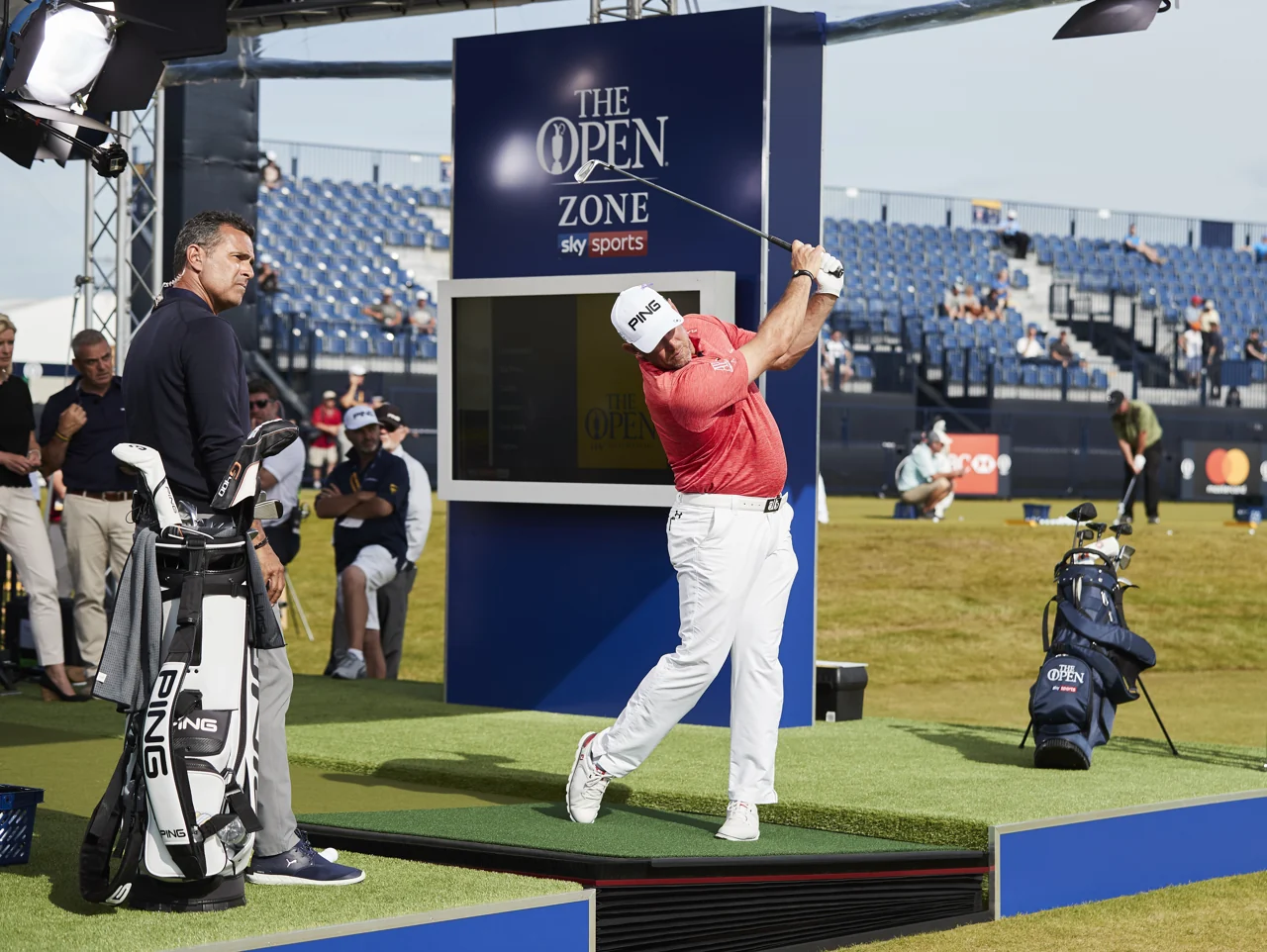
Perfectstroke Hitting Platform
Perfectstroke’s flush-mounted hitting platform measures 1.5 × 1.5 meters, just under five feet square. Its specification gives a 10% maximum along one plane and 5% for a combined slope. The overview on that same page says 8%. Ask which limit applies to the unit being quoted. It lists Foresight, Trackman and FlightScope equipment for measuring shots from the platform. An instructor setting the slope and a game changing it between shots are separate workflows. Perfectstroke hitting specifications
GOLFZON and Golf VX
For a venue buying complete bays, the plate can be part of the game. GOLFZON lists a 24-direction Dual Plate and a 64-direction Motion Plate. An existing TwoVision Dual Plate can work with TwoVisionNX. On the trade-up offer, the Motion Plate is a separate purchase. Have the dealer name the plate on the quote, especially if you saw a different one during a demo. GOLFZON plate comparison and upgrade terms
For the ball-feeding side of the bay, see how simulator brands handle the tee box.
Golf VX also moves its swing plate to match the virtual lie. Its pages cover the T2, FA and Quantum families, but its Quantum descriptions differ. The lineup page says nine axes and the homepage says 15. Ask the dealer to show the actual model handling an uphill lie, a sidehill lie and the transition back to level. A direction or axis count alone tells you little about your footing on those shots. Golf VX lineup · Golf VX homepage · How its swing plate works
Moving putting greens for practicing a real break
If you keep missing an eight-footer on the low side, try rolling it twice on the same contour. On the first attempt, read it yourself. On the second, turn on the projected line if the system has one. Then reverse the slope. The break comes from the turf under the ball. The projection gives you a reference for your read and pace. For a bay where the main goal is counting putts during a round, start with the XS Golf guide to tracked putting and gimmes.
Zen Green Stage and PLATFORM TrueBreak suit a dedicated putting area. Zen’s 2025 list showed Green Stages eight feet wide and 12, 16 or 20 feet long. PLATFORM describes TrueBreak installations up to 22 × 11 feet and lists GEARS, Quintic and SAM among its analysis integrations. When comparing footprints, ask for the longest playable putt between the starting position and an actual cup. The length of the turf includes space beyond that path. Zen’s 2025 US specification and price sheet · PLATFORM model comparison
Perfectstroke Putting Platform includes projected guidance. The maker lists up to 3.5% sideways tilt, and its storefront displayed $16,071.82 in USD. Ask for the delivered US price, installation scope and which tracking equipment comes with that configuration. Its full-swing hitting platform has a separate specification and quote. Perfectstroke putting platform
Full Swing VG3 Virtual Green measures 12 ft 9 in long, 7 ft 9 in wide and 8 in high. A touchscreen controls the contours. The $35,000 starting price buys the moving putting system. Adding the optional $18,500 PuttView projection brings the advertised components to $53,500 before shipping and installation. If the TGL green caught your eye on television, these are the dimensions and prices that matter for the home-sized VG3. Full Swing VG3 specifications and pricing
PuttView Moving Series includes projected guidance that adapts when you change the slope. Ceiling height can rule out a size even if the turf fits. The M12 needs more than 9 ft overhead for an 8 × 12 ft green. The M16 needs more than 10 ft for 8 × 16 ft. The M20 needs more than 12 ft for 8 × 20 ft. PuttView gives maximum putt lengths of 10, 14 and 16 feet respectively. Its USD prices include installation, with travel, shipping and VAT excluded. PuttView Moving Series model specifications and prices
Full swings and breaking putts in one room
Zen Golf Stage and PLATFORM TrueSlope let a golfer hit and putt on the same active surface. That matters in a teaching bay where a second dedicated green would displace the hitting area. Ask to watch a full hole, including where the golfer stands to putt, who sets the break and how the score returns to the game. PLATFORM describes TrueSlope integration with TruGolf. Zen’s documentation distinguishes automatic full-swing terrain from its putting roadmap. Zen Golf Stage · PLATFORM TrueSlope
GOLFJOY S500 Elite puts two moving surfaces in one right-handed room. The stance mat changes the lie for a full shot. A separate Smart Putting System changes the green and cup position. The maker’s global mat leaflet specifies 15 adjustable modules plus a detachable ball feeder. The US S500 page describes 11 actuators in the putting system. Those counts refer to different pieces of equipment. Confirm the version of the mat in the US proposal. GOLFJOY media kit and global mat leaflet · US S500 Elite package
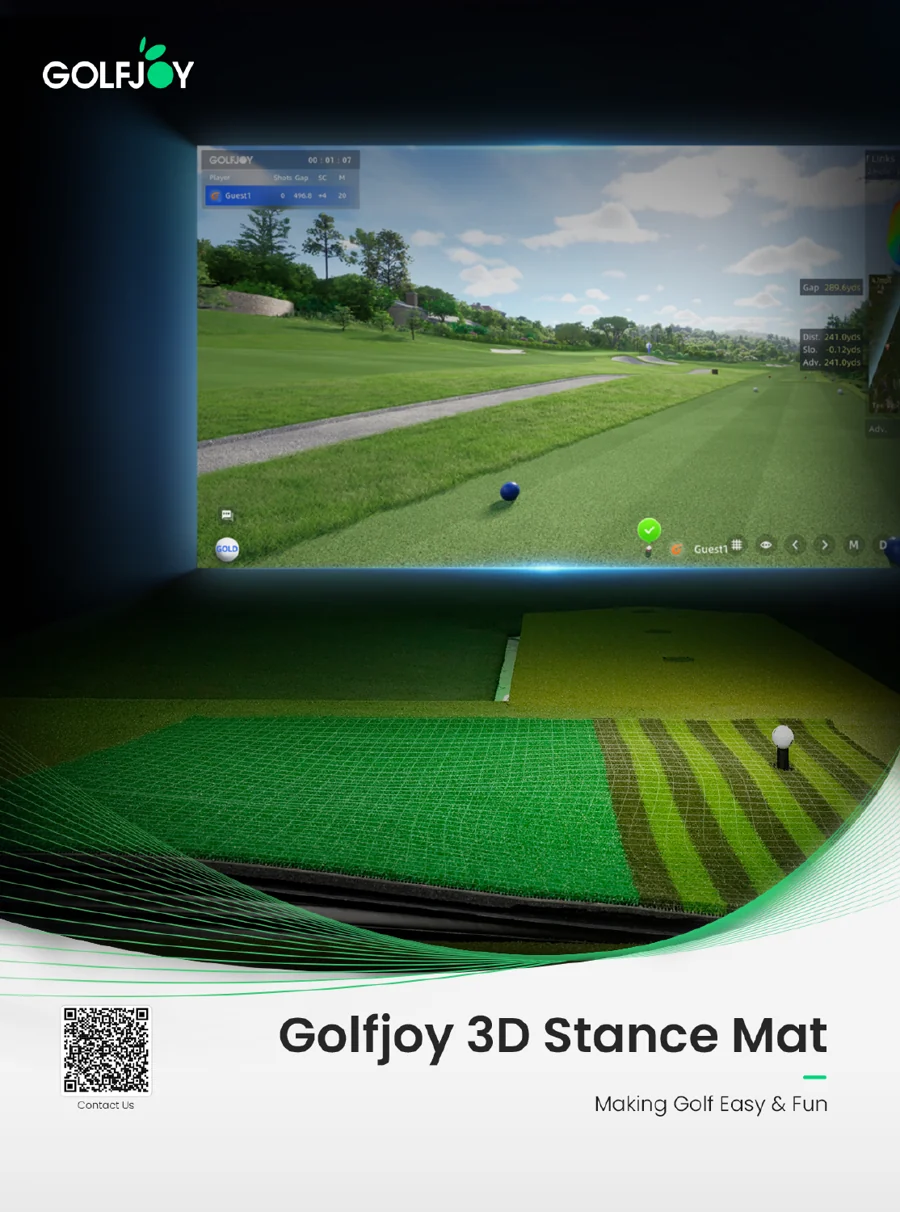
The $76,999 starting price covers the S500 room with Rigel 3 Pro tracking, auto tee, stance mat and putting system. GOLFJOY includes lower-48 ground transport, professional installation and the first 12 months of Diamond software. The published Diamond renewal is $799 a year. Have the written proposal identify site preparation and access costs. For a venue serving left-handed players, the handedness restriction is the first question to resolve. GOLFJOY delivery and software terms
Will GSPro or FSX Play move the floor?
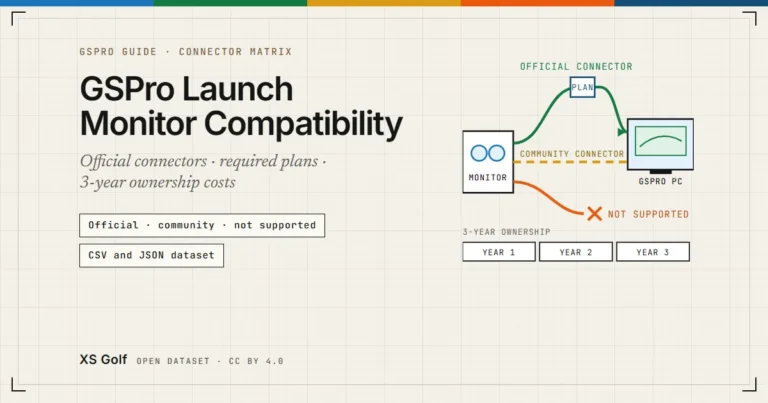
We found no confirmation in the reviewed manufacturer documents that GSPro automatically controls these floors. A launch monitor can send a shot to GSPro while the floor stays in its manually selected position. Before buying, have the seller start a hole on the exact monitor, software version and platform in your proposal, land on a slope and let you watch the next lie set itself. Our GSPro compatibility and ownership-cost guide covers the monitor and software side.
FSX Play has a different documented example. On PuttView’s Foresight integration, you walk to the putting area, finish the hole and the putt count goes back to the simulator. The S10 package uses a green with predefined contours. Its price and handoff do not establish the price or automatic slope control of a Moving Series green. If keeping score across a full round is the goal, see what it takes to play 18 holes indoors. PuttView’s FSX Play workflow
Will a moving platform fit under your ceiling?
Start with the manufacturer’s drawing for the exact model and mounting method. Find the highest position your feet can occupy and the lowest obstruction in the swing area. A garage door track, opener, beam or overhead monitor can sit below the nominal ceiling. Measure from that raised stance and have the installer confirm swing space and the monitor’s permitted mounting range throughout the floor’s travel. Use the room size calculator for the initial room measurements.
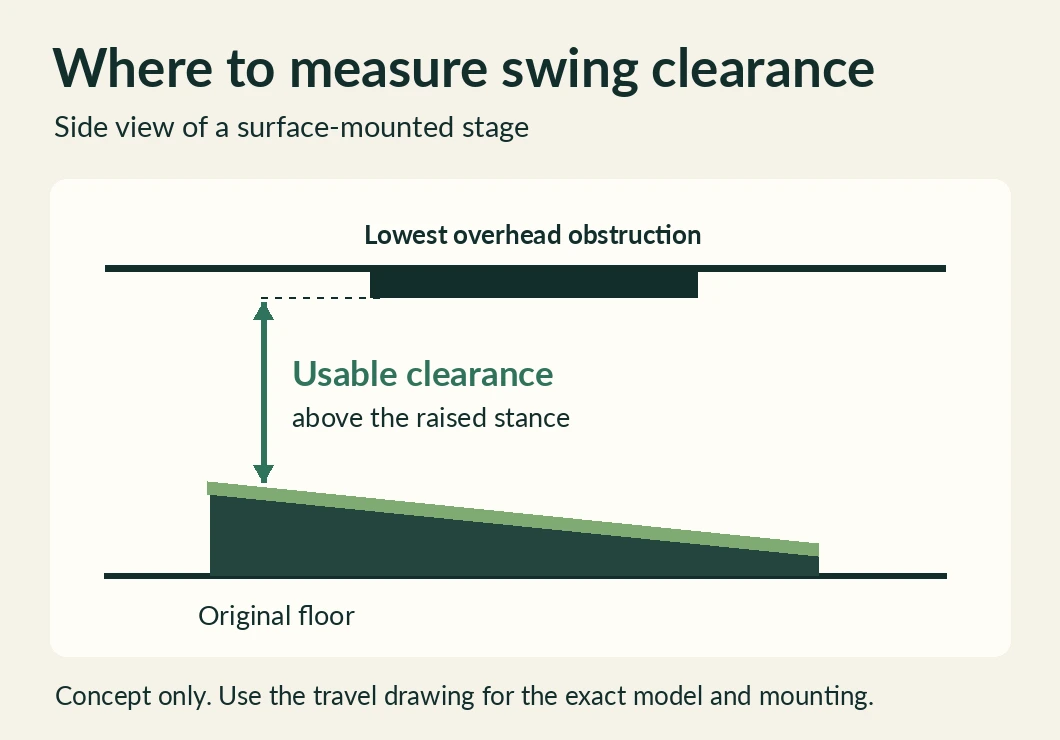
Suppose the lowest obstruction is 10 feet above the slab and the drawing puts your stance 8 inches above the slab at its highest. That leaves 9 ft 4 in from your feet to that obstruction. It is a measurement to take to the installer. Whether a particular golfer can hit driver there depends on their swing, the position of the obstruction and the monitor layout. A recessed design introduces a further question. Where can a technician reach the mechanism once the room is finished? Our home simulator setup guide covers the surrounding floor, screen and projector.
What to put on the quote
- Floor and service access. Ask for the travel drawing, base or recess requirements, edge treatment, power location and space needed to service the unit.
- Equipment and software. Specify the exact platform, turf, controls, projection, tracking and licenses. Ask which modes work manually and which follow the course.
- Installed and ongoing cost. Separate freight, installer travel, electrical and floor work, commissioning, taxes, annual licenses, replacement turf and service calls. Use the simulator cost calculator for the conventional bay, then add the floor proposal and remove any overlapping equipment.
- Daily operation. Have the installer demonstrate leveling, safe entry and exit, the emergency stop and recovery after a power interruption. For a commercial bay, ask who can service a failed unit locally and whether the bay can operate while it waits.
Where the upgrade earns its space
Home garage. If the goal is to play courses through winter, put the room, mat and launch monitor first. Our home simulator comparison gives you conventional builds to price against the upgrade. Spend on a moving floor when you can name the practice session it adds and have the space to run it.
Teaching studio. For uneven-lie lessons, a swing plate with repeatable settings is a sensible shortlist. For a putting coach who teaches start line and pace, ask to run a lesson on a green with a real cup and switchable guidance. A hybrid earns its footprint when you expect to do both in the same bay.
Commercial venue. Trial one bookable session, such as a breaking-putt challenge or a sidehill approach lesson. Count paid bookings, reset time and downtime before fitting a second bay. A crowd around a demonstration tells you that people will watch. The booking sheet tells you whether they’ll pay to play.
Buyer questions
What does a 5% golf platform slope mean?
A 5% grade rises five units over 100 horizontal units along the direction measured. Over four horizontal feet, that is 2.4 inches of rise. It is different from a five-degree tilt. Ask whether a quoted maximum applies in one direction or when the platform slopes in two directions at once.
Why do PLATFORM Golf prices differ across its site?
Its November 2, 2026 comparison lists TruePR from $19,995, TrueBreak from $24,995 and TrueSlope from $28,495. A separately indexed version of its blog navigation shows $14,995, $19,995 and $25,495. We used the dated comparison for the table. Ask for a written quote for your size, controls and installation. November model guide · PLATFORM blog listing
How much should I budget for a Zen Swing Stage 2.0?
Request a current recessed-installation quote. Zen’s 2025 US list priced the earlier 6 × 8 ft Swing Stage at $19,450 in-floor or $21,175 on-floor, before shipping, installation and taxes. That sheet also separated basic app control from an enhanced subscription. Ask which software entitlement your chosen simulator integration needs today. Zen’s historical USD price list
How we researched this guide. XS Golf compared manufacturer specifications, integration guides, US pricing and installation terms on November 23, 2026. This is a desk-researched comparison. We have not tested the platforms hands-on. Historical prices and global product specifications are labeled where they appear.