Golf Booking in 2026: What the Simulator Boom Is Doing to the Global Tee Sheet
Last updated: September 17, 2026
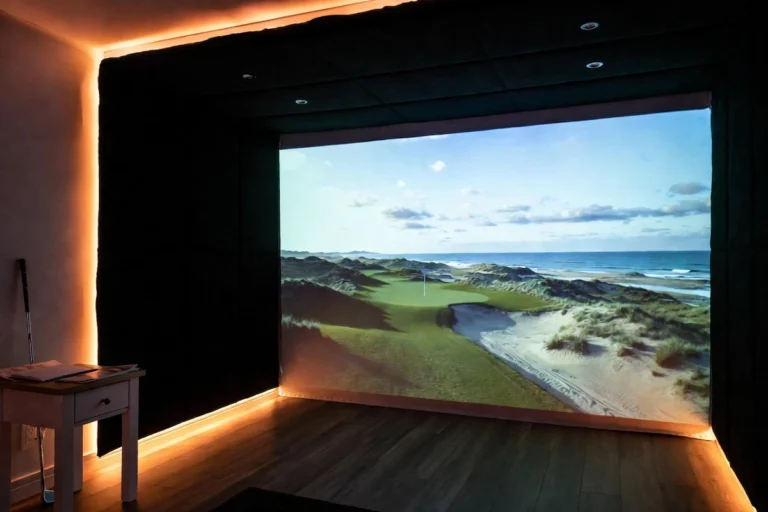
Search interest in short-term rentals with a golf simulator in the basement has gone from a novelty to a category. Hosts are installing bays to fill winter weekends. Groups are booking houses because of the screen, not the location. And somewhere in that shift is a question worth asking: if golfers are now renting a place to play indoors, what is happening to the machinery that books the actual rounds?
New for 2026: our indoor 18-hole golf simulator guide has the national median bay rate, the per-bay versus per-player question, and a checklist for vetting a venue before you book.
The short answer is that the booking layer stopped being about tee sheets. In 2026 the biggest marketplace in golf changed owner, added indoor bay time to its inventory, and kept its coverage stubbornly regional. Meanwhile the parts of the world that were never served by a marketplace are still not served by one, and the newest formats of golf are being booked through channels that have nothing to do with golf at all.
Quick Verdict
There is still no Booking.com for golf, but the biggest marketplace now sells indoor bay time alongside tee times
- The one platform that scales: GolfNow, which works with more than 9,000 courses across 52 countries and now sits inside Versant after the January 2026 Comcast spin-off.
- The genuinely new thing: since August 2025 GolfNow lists Trackman simulator and driving range bays, so indoor time and outdoor time share one search box for the first time.
- Where it works without help: the United States including Hawaii, the UK and Ireland, Portugal, Australia, Mexico’s resort corridors, Iceland.
- Where you need a person, not an app: Japan, most private South American clubs, Madagascar, premium Indian clubs, and Greenland, which has two courses and no marketplace at all.
- The habit that saves money: discover on the marketplace, confirm price and cancellation terms on the course’s own page. Headline rates and checkout totals are different numbers.
Rented simulator bays are becoming bookable inventory. Rented houses with simulators in them are not, and no platform has claimed that space yet.
How we evaluated these platforms. XS Golf did not book rounds on these services to test them. This guide is research and synthesis: platform course directories, company and partner announcements, national federation and tourism-board material, and regional operator listings. Inventory counts and market-size figures come from company statements and secondary industry reports, so treat them as directional rather than audited. Where a figure could not be confirmed against a primary source it is described as unconfirmed or left out. Our sourcing rules are set out on the XS Golf standards page.
The Airbnb signal, and the thing nobody can measure
Start with an honest admission, because the rest of this piece depends on it. There is no published data on how many short-term rental listings advertise a golf simulator, how fast that number is growing, or what the amenity does to nightly rate. Airbnb does not break out the amenity. AirDNA, which estimates short-term rental performance from listing and calendar signals rather than booking data, does not publish a golf-simulator cut either.
What does exist is a wall of content from simulator installers, host-automation vendors and rental-equipment companies, all of it arguing that a simulator lifts occupancy and nightly rate, none of it showing a dataset. That is marketing, and it should be read as marketing. Anyone quoting a percentage uplift for a simulator amenity is quoting someone who sells simulators.
So the trend is real in the sense that you can see the listings and the installer businesses built around them. It is not real in the sense that anyone has counted it. Hold both of those at once, and the interesting part becomes what the industry is doing in response, which is measurable.
What actually changed in 2026
GolfNow left NBC
For years GolfNow operated under the NBC Sports Next banner, and most write-ups of the golf booking market still describe it that way. That description is now wrong. Comcast completed its spin-off of most NBCUniversal cable networks and selected digital assets into Versant, which began trading on Nasdaq under the ticker VSNT on 5 January 2026. Versant’s portfolio includes Golf Channel, GolfNow, GolfPass and SportsEngine alongside USA Network, CNBC and MS NOW.
The detail that matters for golfers is the revenue shape. Versant’s president of digital platforms and ventures, Will McIntosh, told Front Office Sports at the 2026 PGA Show that roughly half the company’s golf economics come from the Golf Channel network and half from GolfNow and GolfPass. Booking and membership are no longer a side business attached to a television channel. They are half the golf company.
A booking platform that carries half of its parent’s golf revenue behaves differently from one that fills spare tee times for a broadcaster. Expect more aggressive membership bundling through GolfPass, which already offers monthly tee-time credits and waived booking fees, and more pressure on courses that would rather keep the customer relationship themselves.
Simulator bays became marketplace inventory
This is the part that connects directly to the rental-with-a-simulator story. GolfNow and Trackman announced a reservation-technology integration in February 2025, covering the 1,000-plus indoor and outdoor Trackman locations across North America. The integration went live in August 2025. Facilities activate a GolfNow module inside the Trackman Portal, their available bay times list automatically, and those bays appear on GolfNow.com and in the GolfNow app next to ordinary tee times. Trackman’s vice-CEO framed the commercial logic plainly: bay utilisation outside peak windows. Trackman is also the reference point most buyers measure consumer units against, which we cover in Trackman versus SkyTrak MAX.
GolfNow has also added club-fitting sessions to the same marketplace, and through a separate partnership with Twilight Golf it now lists recreational leagues. The direction is a single booking surface for every format of the game: eighteen holes on Saturday, an hour in a bay on Wednesday night, a fitting in March, a league in June.
Which leaves one obvious gap. Commercial bays are being aggregated. Private bays in rented houses are not. A host with a home simulator build has no golf-side channel at all, and lists on general accommodation platforms where the simulator is a photo and a line of amenity text. If a marketplace ever closes that gap, this is where it happens.

The regional map in 2026
Coverage is the wrong way to think about this market. Difficulty is better. The question is not whether a platform exists but whether you, as a visiting golfer without a local phone number or a member’s introduction, can complete a booking on it.
| Region | Where to start | Self-booking as a visitor |
|---|---|---|
| United States (mainland) | GolfNow, TeeOff, Supreme Golf, then the course site | Easy |
| Hawaii | GolfNow, Hawaii-specific resellers, resort sites | Easy, but book far ahead |
| Mexico | Regional specialists, resort and all-inclusive desks | Easy in resort corridors |
| UK & Ireland | GolfNow, BRS-powered club sites, club direct | Easy |
| Portugal | OnTee, Leading Courses, Algarve specialists | Easy |
| Wider EU | Greenfee365, Leading Courses, Golfamore, national systems | Moderate, fragmented by country |
| Iceland | Club sites on the federation platform, golfscape, packagers | Moderate, short season |
| Greenland | Direct contact with the club or hotel | Hard, two courses, no marketplace |
| Australia | TeeNet, then the club’s own confirmation page | Easy |
| Japan | Rakuten GORA, GDO, or a concierge | Hard without Japanese |
| South America | Specialist operators, resort direct | Hard at private clubs |
| South Africa | Course systems, local tee-sheet apps, operators | Moderate |
| India | 4moles where available, otherwise direct or operator | Moderate to hard |
| China | Asia specialist platforms, resort English channels | Hard |
| Indonesia & SE Asia | GoGolf, regional platforms, resort direct | Moderate |
| Madagascar | Course, hotel or local operator | Hard, minimal open inventory |
Hawaii: American plumbing, resort pricing

Hawaii is technically the easiest destination on this list and practically one of the most expensive to get wrong. Because it is a US state, it sits inside GolfNow’s domestic inventory, and the resort courses on Maui, Oahu, the Big Island and Kauai run the same tee-sheet software as anywhere else in the country. You can book a round on Maui from a phone in Ohio with no more friction than booking a municipal track at home.
There is also a layer that does not exist for most mainland destinations: Hawaii-specific resellers. Honolulu-based Hawaii Tee Times markets discounted access across roughly 50 courses on Oahu, Maui, the Big Island, Kauai and Lanai and states it charges no booking or membership fees. Cross-border aggregators such as golfscape also carry Hawaiian inventory. On a destination where a single resort round can run into three figures, comparing a reseller rate against the resort’s own rate is worth the five minutes.
Two practical notes. First, resort guests frequently get preferential rates and booking windows, so if you are staying on property the hotel’s golf desk is a real channel rather than a courtesy. Second, aeration schedules and overseeding matter more than they do at home because you have flown a long way for the round. Ask before you pay. Our US golf travel destinations guide covers how Hawaii compares against the mainland resort corridors on cost per round.
Mexico: booked at the resort desk, not the marketplace
Mexico has more good golf than its booking infrastructure suggests, and almost none of it flows through a GolfNow-style marketplace. Instead the country runs on regional specialists that hold direct relationships with the courses. Golf Mexico Tee Times covers something in the region of 30 to 35 courses across Los Cabos, Cancún, the Riviera Maya, Puerto Vallarta, Mazatlán and Acapulco, and states it charges no membership or booking fees. Tee Times Riviera Maya and Teed Off Tee Times both operate as Cancún and Riviera Maya specialists combining an online green-fee booking system with concierge support.

The second channel is the resort itself. The Riviera Maya in particular is dominated by properties with courses attached, and the all-inclusive model means golf is frequently bundled, discounted for guests, or both. If you are staying at a property with a course, start there before you shop a third-party rate.
Seasonality is the thing people underestimate. Green-fee pricing on the specialist sites is openly tiered by season and tee time, with summer morning rates and October rates published as separate line items on the same course. The difference between a July afternoon and an October morning on the same layout is substantial. If your dates are flexible by even a week, check both.
Iceland: more courses than you think, a very short window

Iceland has around 60 to 65 golf courses for a population under 400,000, which is among the highest counts per head anywhere. Figures vary slightly by source: Golf Iceland, the Icelandic golf and tourism association, lists 63 courses of which 18 are full-length and 45 are nine-hole, while Guide to Iceland puts the total at roughly 65. Icelandair’s own guide counts ten courses in the greater Reykjavík area. All of them are open to visitors.
The season is the binding constraint. Play generally runs from late May to early September. The midnight sun makes tee times through the night possible from early June to the later part of July, which is also the busiest stretch and the one that needs advance booking. The Arctic Open at Akureyri, played in June under the midnight sun, is the event most visiting golfers have heard of.
On booking mechanics, the Golf Union of Iceland selected GolfBox as its centralised club platform, covering member administration, handicapping and tee-time booking, under an agreement reported by Golf Business News. Whether that contract still stands in 2026 is not something we could confirm, so treat the platform name as indicative and the club’s own page as authoritative. In practice several clubs still take bookings by phone and email, and some 18-hole courses ask for a handicap certificate. Golf Iceland lists green fees in the greater Reykjavík area in the region of ISK 9,500 to 20,000 for 2025, with rates outside the capital area starting considerably lower.
One caution on sources. The Golf Iceland site carries promotional content unrelated to golf, which is a reason to verify course-level detail against the individual club rather than treating the portal as final.
Greenland: two courses, zero marketplace

Greenland is the clean edge case that shows what a market looks like with no booking layer whatsoever. There are two golf venues of note. Nuuk Golf Club plays nine holes on the world’s most northerly permanent course of its kind. The other is Uummannaq, roughly 600 km north of the Arctic Circle, where a nine-hole layout is cut into the sea ice of the fjord each year and its shape is determined by wherever the icebergs froze in. Putting surfaces are called whites rather than greens, for the obvious reason.
Uummannaq is known for the World Ice Golf Championship, a 36-hole two-day event open to players with a handicap of 36 or better. Here is where we have to be careful. Sources disagree on whether the championship started in 1997 or 1999, and although several describe it as annual, we could not confirm an edition held in any recent year. Every account we found dates from 2023 or earlier, and the event’s long-time title sponsor departed a long time ago. Treat it as a historic fixture of uncertain current status and confirm directly with Greenland tourism or the hotel in Uummannaq before planning a trip around it.
Booking, in both cases, means writing to the club or the hotel. There is no aggregator, no tee sheet to refresh, and no cancellation policy to compare. Getting to Uummannaq involves a boat. This is the honest opposite end of the spectrum from opening an app and filtering by price.
Portugal and the rest of Europe
Portugal remains one of the better-served destinations in Europe for online tee times. OnTee carries real-time inventory across the Algarve, Lisbon and other regions, Leading Courses lists bookable Portuguese inventory alongside Spain and France, and a set of Algarve specialists hold direct course relationships and often charge no booking fee. Peak Algarve season, which for northern European golfers means winter and the shoulder months, still rewards booking early. Our Algarve golf travel guide covers the course clusters in more detail.
Outside Portugal the picture stays fragmented. Greenfee365 and Leading Courses work for cross-border discovery, Golfamore runs a subscription model that is strongest in the Nordics, and a large amount of inventory lives in national systems that never surface in an English-language search. For a multi-country trip, plan on two or three platforms plus direct resort booking. There is no single cart. The same applies in the UK and Ireland, where online availability is high but golfers still prefer to finish on the club’s own page, and where a great many club booking engines trace back to BRS.
If Britain or Ireland is the trip, our Scotland guide and Ireland guide cover ballot systems and visitor windows, which matter more than platform choice at the courses people actually want to play.
The markets where an app will not help you
Japan is the clearest case. Rakuten GORA and GDO are mature, high-volume domestic platforms, and the barrier for visitors is practical rather than technical: Japanese-language interfaces, local payment and account requirements, and reservation norms that do not map onto Western marketplace habits. Most inbound golfers end up with a hotel concierge or a specialist operator. Budget for that rather than planning around self-service. Our Japan golf travel guide goes through what that assistance actually costs.
South America has no dominant open marketplace. The best courses in Buenos Aires, Patagonia and Brazil frequently require advance arrangement, member introductions or an operator relationship, and many do not publish an open public tee sheet at all. Resort and public inventory is more accessible. Patagonia is strongly seasonal, roughly November to March; Buenos Aires plays closer to year-round.
In Africa, South Africa has by far the most developed digital layer, with course websites, local tee-sheet systems and selected inventory on cross-border platforms. Morocco and Mauritius support online green fees and packages through specialist channels. Madagascar has a handful of courses, directory listings without real-time inventory, and booking that runs through the course, the hotel or a local operator. India’s most visible domestic platform is 4moles, strongest in the major metros, with premium and private clubs still running on member and introduction systems. China is largely gated by language and account requirements, so Asia-focused specialists or the resort’s own English channel are the practical path. Indonesia and the wider Southeast Asian market are more open, with GoGolf covering local inventory alongside resort direct booking. Australia is straightforward: TeeNet for discovery, the club’s page to confirm.
For a Gulf trip, which sits somewhere between resort-easy and access-restricted, our Dubai and Abu Dhabi guide covers the booking windows on the courses worth the flight.
What this means if you own a simulator
Three things follow from all of this, and they are the reason a booking article belongs on a simulator site.
The course you are flying to is probably already on your screen. The virtual course libraries that ship with the major simulator platforms include a large share of the destination courses people plan trips around. Playing a layout a dozen times before you arrive is the cheapest preparation available, and it is a different exercise from range practice. We covered how to do it properly in playing courses on a simulator before you travel, and the simulator software guide compares which platforms carry which courses.
Bay time is now a cost line, not a favour. When commercial bays sit on the same marketplace as tee times, they get priced like tee times: dynamically, with off-peak discounts. That changes the arithmetic on whether to build at home. If you are weighing a build against paying for bay time, the three-year cost of ownership breakdown is the honest comparison, and the sub-$5,000 garage build guide sets the realistic entry point. On the hardware side, the launch monitors under $1,000 guide and the budget launch monitor shootout cover what the entry tier actually delivers.
If you are the one renting out the simulator, you are on your own. There is no golf-side distribution channel for a private bay. That means the accommodation listing has to carry the weight: accurate ceiling height, the actual launch monitor model, which software and course library, whether left-handed play is possible, and whether clubs are provided. Guests who care enough to book for the simulator care about exactly those details, and vague listings get the bad reviews. If you are specifying a build for guests rather than yourself, durability and setup tolerance matter more than peak accuracy, which pushes the decision differently from a personal room. The home simulator guide and the setup guide both cover the space and tolerance side. If the bay is already built and underused, the eight-week practice programme is a better answer than another accessory.
How to actually book a golf trip in 2026
- Discover on whichever marketplace or specialist covers the region. Use it to see what exists and roughly what it costs.
- Open the course or resort’s own page for the same slot. Compare the total after fees, not the headline rate.
- Read the cancellation window before you pay. Discounted times routinely carry tighter terms, sometimes 72 hours or less.
- For restricted clubs, seasonal destinations and anywhere the tee sheet is not public, contact an operator or the property well ahead rather than hunting for last-minute inventory.
- If the trip is built around one course, book that round first and arrange everything else around it.
The rest of our destination coverage sits on the golf travel hub, including Pebble Beach, Bandon Dunes, Myrtle Beach, Scottsdale, Augusta and destinations that work for couples. Everything on the indoor side lives on the simulators hub.
Frequently asked questions
Is there a single app that books golf anywhere in the world?
No. GolfNow is the closest by scale, working with more than 9,000 courses across 52 countries, but its practical strength is concentrated in North America, the UK and Ireland. Outside those markets you will need regional platforms, national systems or an operator. Anyone describing a single global golf booking app is describing something that does not exist.
Can I book an indoor simulator bay the same way I book a tee time?
In North America, increasingly yes. The GolfNow and Trackman integration went live in August 2025 and puts Trackman simulator and driving range bay times on GolfNow.com and the GolfNow app, filtered in the same search. It covers Trackman-powered facilities that have switched the module on, so coverage depends on the operator rather than the technology.
Are golf simulators in short-term rentals actually a growing category?
Visibly yes, measurably unknown. Neither Airbnb nor the main short-term rental analytics providers publish a golf-simulator amenity breakdown, so there is no listing count or rate-uplift figure to quote. The sources making revenue claims are simulator installers and host-tool vendors selling into the trend, which is not evidence.
Do I save money booking direct instead of through a marketplace?
Often, and not always in the price. Marketplace headline rates can be lower, particularly on discounted times, but convenience or service fees appear at checkout and the cheapest slots carry the tightest cancellation windows. Direct booking usually gives clearer terms and sometimes the same or better rate. The reliable habit is to price both for the same slot.
Can I book golf in Hawaii the same way as the mainland US?
Yes. Hawaii sits inside the same domestic booking systems, so GolfNow and the resort’s own site both work without any extra friction. What changes is the price level and how far ahead the good times go, so treat it as a resort destination rather than a weekend round and check Hawaii-specific resellers against the resort rate.
How do I book golf in Greenland?
By contacting the golf club or the hotel directly. Greenland has two golf venues of note, Nuuk Golf Club and the seasonal ice layout at Uummannaq, and no booking platform carries either. The World Ice Golf Championship associated with Uummannaq has no recent edition we could confirm, so verify with Greenland tourism before building a trip around it.
Sources
Versant spin-off completion and portfolio: Variety and Versant’s own investor communications, January 2026. Versant golf revenue split: Front Office Sports, January 2026. GolfNow course counts, registered users, GolfPass benefits and the Trackman integration: GolfNow and Trackman announcements reported by Golf Business News and First Call Golf, February and August 2025. GolfNow’s expansion into fittings and leagues: National Golf Foundation business profile. Iceland course counts, season and green-fee ranges: Golf Iceland, Guide to Iceland and Icelandair. Iceland federation platform: Golf Business News. Greenland course detail and the ice championship: Golfmagic, Montana State Golf Association and Greenland tourism material, all predating 2024. Hawaii and Mexico regional platforms: the operators’ own published course lists and fee statements. Regional coverage for Europe, Japan, Australia, South America, Africa and Asia: platform directories and operator materials compiled for this guide. Market-size figures for tee-time platforms are drawn from secondary industry estimates and are directional rather than audited.