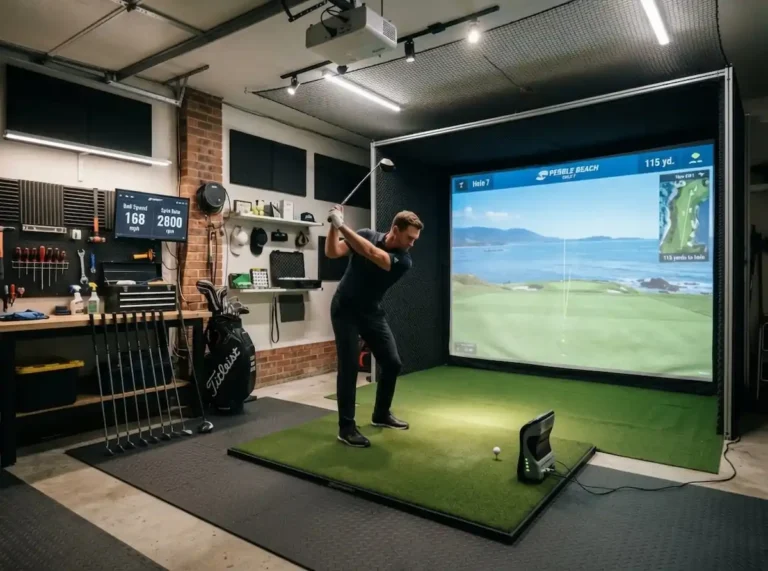
Uneekor Eye Mini vs. SkyTrak ST MAX vs. FlightScope Mevo Gen 2: Best Mid-Range Launch Monitor for Home Golf Simulators (2026)
Last updated: September 17, 2026
Buying Guide · Simulator Reviews
Uneekor Eye Mini vs. SkyTrak ST MAX vs. FlightScope Mevo Gen 2
The $1,000–$3,000 launch-monitor bracket is the most contested corner of the home-simulator market. Three names define it — a photometric camera, a hybrid, and a portable radar. Here’s how they compare for indoor sim play, drawn from published specs and owner reports, not a lab we don’t yet run.
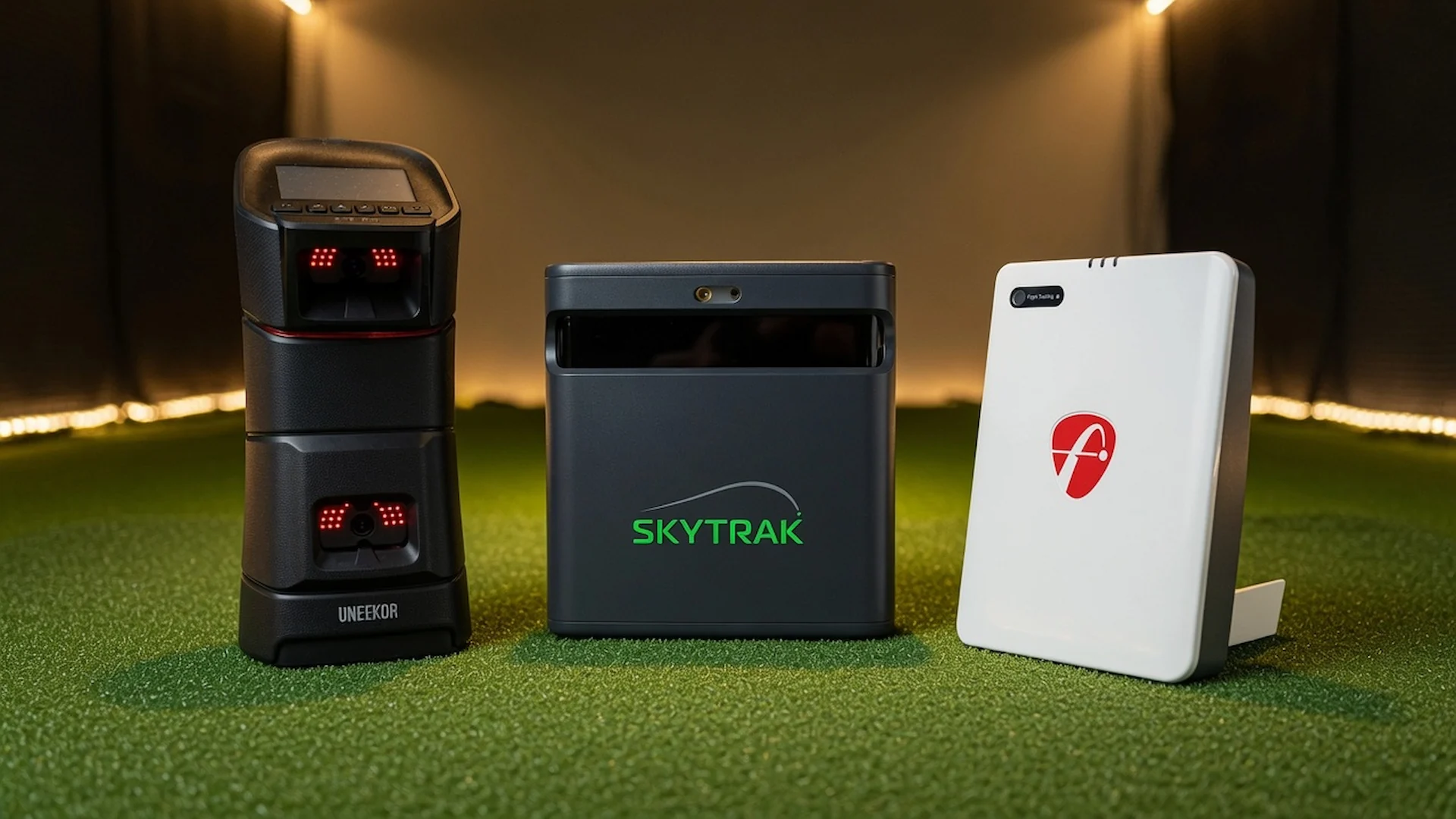
Photo: manufacturer press images (Uneekor, SkyTrak, FlightScope).
Spend any time in r/Golfsimulator and the same names surface whenever someone asks what to put in a garage bay for the price of a decent set of irons. The SkyTrak ST MAX anchors a lot of balanced builds. The Uneekor Eye Mini is the photometric favorite for tight rooms and impact video. And FlightScope’s portable radar — long carried by the Mevo+ — now lives on in the Mevo Gen 2. None of them is a $15,000 Foresight GCQuad, and none of them pretends to be.
What follows is a research-and-synthesis comparison: manufacturer specifications, aggregated owner and reviewer reports, and the one thing we think is genuinely useful to explain — why a photometric camera and a Doppler radar can hand you different numbers from the same swing indoors. That difference, not a fabricated shoot-out, is the part worth reading.
Key takeaways
- Tight room → Uneekor Eye Mini. The camera sits beside the hitting zone and needs essentially zero depth behind the golfer, reads any ball, and includes club and putting data — but it has the highest entry price, and GSPro requires Uneekor’s Pro tier (~$199/year).
- Balanced indoor build → SkyTrak ST MAX. Photometric ball data plus dual Doppler radar for club data (21 parameters, no stickers), $2,995 MSRP but frequently discounted direct; still doesn’t measure angle of attack.
- Indoor/outdoor flexibility → FlightScope Mevo Gen 2 (~$1,299). Lowest entry price, no subscription for core data, and it replaced the discontinued Mevo+ in late 2025; indoor spin still favors a marked/RCT ball and adequate depth behind the ball.
- Your room decides this, not the spec sheet — measure the depth behind the ball before you shortlist.
At a glance
| Feature | Uneekor Eye Mini | SkyTrak ST MAX | FlightScope Mevo Gen 2 |
|---|---|---|---|
| Core technology | Dual photometric cameras (Dimple Optix) | Photometric camera (ball) + dual Doppler radar (club) | 3D Doppler radar + camera (Fusion Tracking) |
| Guide price | Check current price | $2,995 MSRP (often on sale) | ~$1,299 |
| Data points | Full ball + club | 21 (9 ball / 5 club / 7 calculated) | ~18–20 parameters |
| Stickers / marked balls | No — any ball | No — none required | Indoor spin wants a sticker / RCT ball |
| Indoor space need | Minimal — sits beside the ball | Minimal — sits beside the ball | Significant — several feet behind the ball |
| Software | GSPro, E6, TGC via connector | Native + GSPro / E6 | E6 bundle included; GSPro compatible |
| Subscription | Player free; Pro ~$199/yr; $599 for more | Free basics; paid for courses | None for core data; one-time add-ons |
Figures verified against manufacturer and authorized-retailer listings in July 2026; confirm current pricing before you buy.
Photometric precision · tight rooms
Uneekor Eye Mini
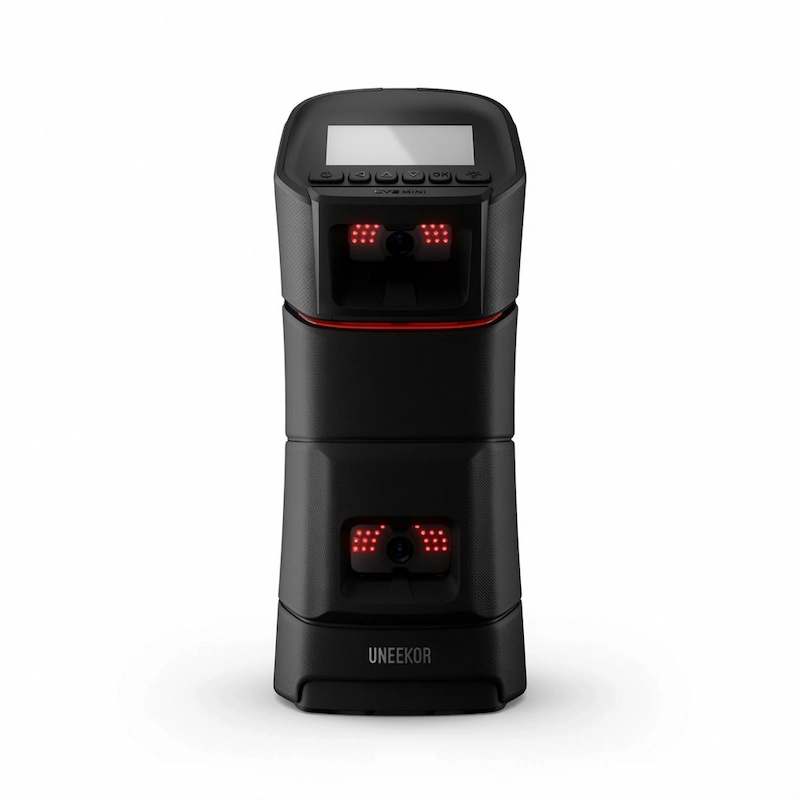
Photo: Uneekor.
The Eye Mini is the pick people reach for when floor space is the constraint. Because the camera system sits parallel to the hitting zone rather than behind it, it asks for essentially zero depth behind the golfer — which is why it keeps coming up as the upgrade path for builders leaving a budget side-mount unit. Its Dimple Optix camera system reads any ball with no stickers or proprietary markings, and Club Optix gives you high-speed impact video to see the strike itself. Full club and putting data are included with no additional fee.
It carries the highest entry point of the three, and unlocking third-party simulation like GSPro moves you onto Uneekor’s Pro tier — around $199 a year, or $599 for the fuller package with more courses, AI Trainer and GameDay. If photometric consistency and swing feedback in a small room are your priorities, that’s where the money goes. (Note: Uneekor also sells a cheaper, Amazon-exclusive Eye Mini Core that is ball-data only — a different unit from the one covered here.)
Strengths
- Zero depth behind the golfer — ideal for tight bays
- Club Optix high-speed impact video
- Reads any ball — no stickers or marked balls
- Full club + putting data included
Trade-offs
- Highest entry point of the three
- Pro subscription to unlock third-party sims
- Requires a PC to run simulator software
Balanced · plug-and-play
SkyTrak ST MAX
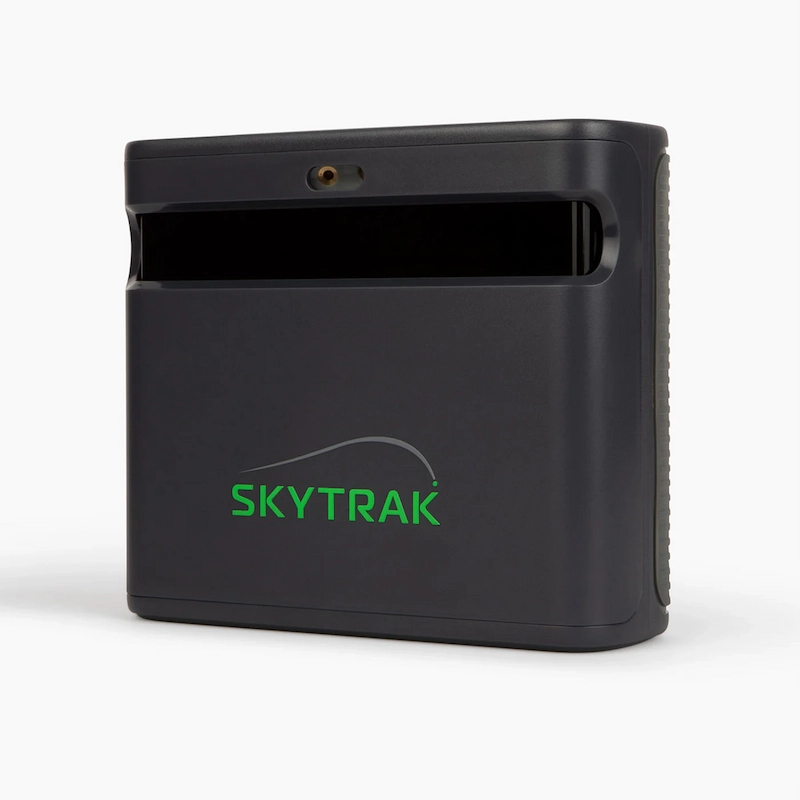
Photo: SkyTrak.
The ST MAX is the unit we build around most often in the mid-range because it asks the least of you. It replaced the discontinued SkyTrak+ and pairs a photometric camera for ball data with dual Doppler radar for club data, reporting 21 parameters with no stickers required. It drops cleanly into a standard garage bay, connectivity is solid over Wi-Fi, Mac support is good, and the native software is polished enough that a lot of owners never feel the need to leave it. Reviewers consistently praise its shot-to-shot consistency.
Two honest caveats: at $2,995 it lists a full $1,000 above the outgoing SkyTrak+, and it still doesn’t measure angle of attack — a metric some cheaper units include. That said, SkyTrak runs frequent promotions (the ST MAX has recently sold around $1,995 direct), so check current pricing before you decide. For a reliable, low-fuss simulator that pairs with the enclosures and projectors in our build guides, it remains the pragmatic default.
Strengths
- Drops into a standard garage bay with little fuss
- Polished native software ecosystem
- No stickers or marked balls; strong Mac support
- Widely praised shot-to-shot consistency
Trade-offs
- $1,000 more than the outgoing SkyTrak+
- Still no measured angle of attack
- Course play sits behind a paid tier
Portable · indoor/outdoor hybrid
FlightScope Mevo Gen 2
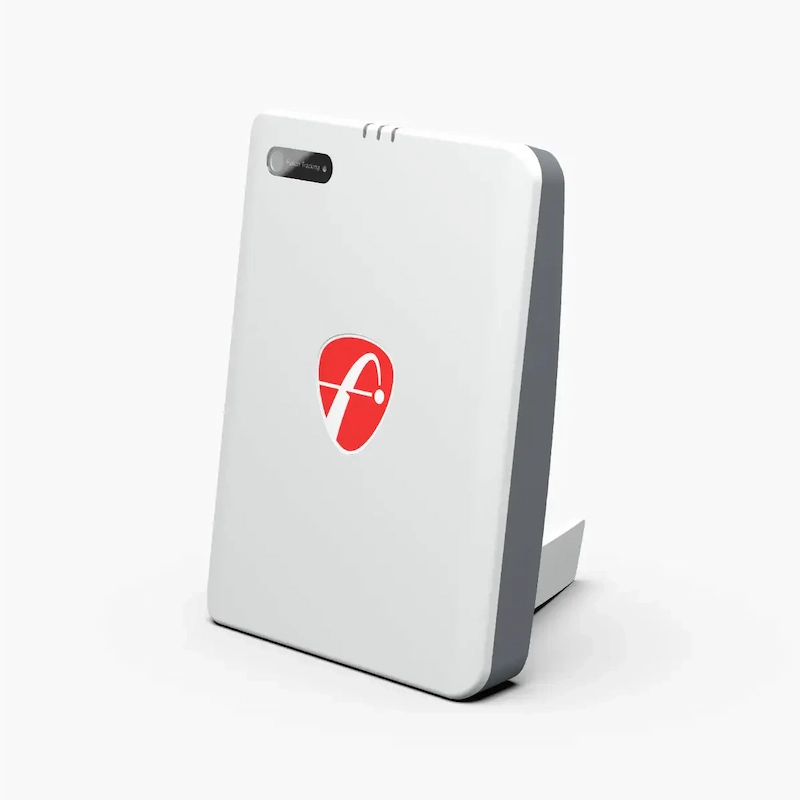
Photo: FlightScope.
The Mevo is the flexibility play and the lowest point of entry. Radar tracking is at its best outdoors and in varied conditions, and FlightScope’s Fusion Tracking — 3D Doppler radar paired with synchronized cameras — has improved indoor behaviour considerably, though owners note indoor spin still wants a sticker or an RCT ball, careful placement, and adequate depth behind the ball. Core data carries no subscription, and an E6 course bundle is included out of the box.
FlightScope discontinued the long-serving Mevo+ in late 2025 and replaced it with the Mevo Gen 2 (~$1,299), the model we point new buyers to. It carries the same tracking engine plus a six-hour USB-C battery and — critically — now supports the Pro Package and Face Impact Location upgrades that were once the Mevo+’s only edge. Remaining Mevo+ stock is selling at closeout (often ~$1,044–$1,299), so it can be a genuine bargain, but it’s end-of-life hardware with a shorter support horizon; for a new purchase the Gen 2 is the safer call.
Strengths
- Lowest entry price; core data has no subscription
- E6 course bundle included out of the box
- Excellent outdoors and at the range
- 6-hr USB-C battery + Pro/Face Impact upgrade path
Trade-offs
- Needs depth behind the ball — rules out short rooms
- Indoor spin wants a sticker / RCT ball
- Mevo+ is discontinued — buy it only on clearance terms
Why photometric and radar can disagree indoors
This is the part a spec sheet won’t tell you — and the reason we don’t treat “which is more accurate” as a single-winner question.
A photometric unit (the Eye Mini, and the camera side of the SkyTrak ST MAX) measures the ball directly at impact: it photographs the ball leaving the face and computes speed, launch and spin from those images. A Doppler radar (the Mevo) instead watches the ball travel and infers the same values from the flight it can see. Outdoors, where the ball flies unobstructed, radar has plenty of signal to work with. Indoors, the ball meets the screen within a few feet, so a radar has a much shorter window to observe — which is why radar units generally ask for more room behind the ball and can be more sensitive to setup, and why camera-based units tend to read more consistently in a tight bay.
That’s a general principle about how the two technologies work, not a claim that we ran them side by side. It’s also why a number that looks “wrong” often isn’t a broken unit — it’s the same swing, read two different ways. Match the technology to your room and your primary use before you compare data points.
Which one for which room
Choose the SkyTrak ST MAX for a reliable, balanced garage build that pairs with the enclosures and projectors in our guides — the least fussy of the three (and watch for its frequent sales).
Choose the Uneekor Eye Mini if your room is tight, you want impact video, or photometric consistency is the priority and you’ll accept the higher spend.
Choose the FlightScope Mevo Gen 2 if you split time between the bay and the range and want the lowest entry price — and favour the current Gen 2 over the discontinued Mevo+ unless the clearance price is too good to pass up.
How we put this together
This comparison is based on manufacturer specifications, aggregated owner and reviewer reports, and simulator-software compatibility documentation, verified against manufacturer and authorized-retailer listings in July 2026. It does not describe first-party robot or launch-monitor testing — a lab, tester panel and re-test policy are commitments we’re building out from 2027 forward, and we won’t imply results we don’t have. Pricing changes often; confirm current figures on the manufacturer’s site. Some links are affiliate links (Amazon Associates): XS Golf may earn a commission at no extra cost to you, and it never changes a placement.
Sources: manufacturer specifications and product documentation from Uneekor, SkyTrak, and FlightScope; owner reports aggregated from r/Golfsimulator and GolfWRX forum threads; pricing verified against manufacturer and authorized-retailer listings, July 2026.